
Cozido das Furnas is the best-known dish from Furnas on São Miguel Island. It combines meat, sausages and vegetables cooked for hours using geothermal heat from the volcano. The sealed pot is placed in a prepared hole in the fumarolic field beside Furnas Lake and retrieved when the ingredients have become tender.
Quick answer: book a restaurant in advance if you want to try cozido das Furnas, particularly in summer and at weekends. Cooking takes several hours, roughly five to eight depending on the size of the pot, the method and the establishment.
The dish is not cooked directly on lava or submerged in a hot spring. It uses steam and heat rising from the volcanic ground.
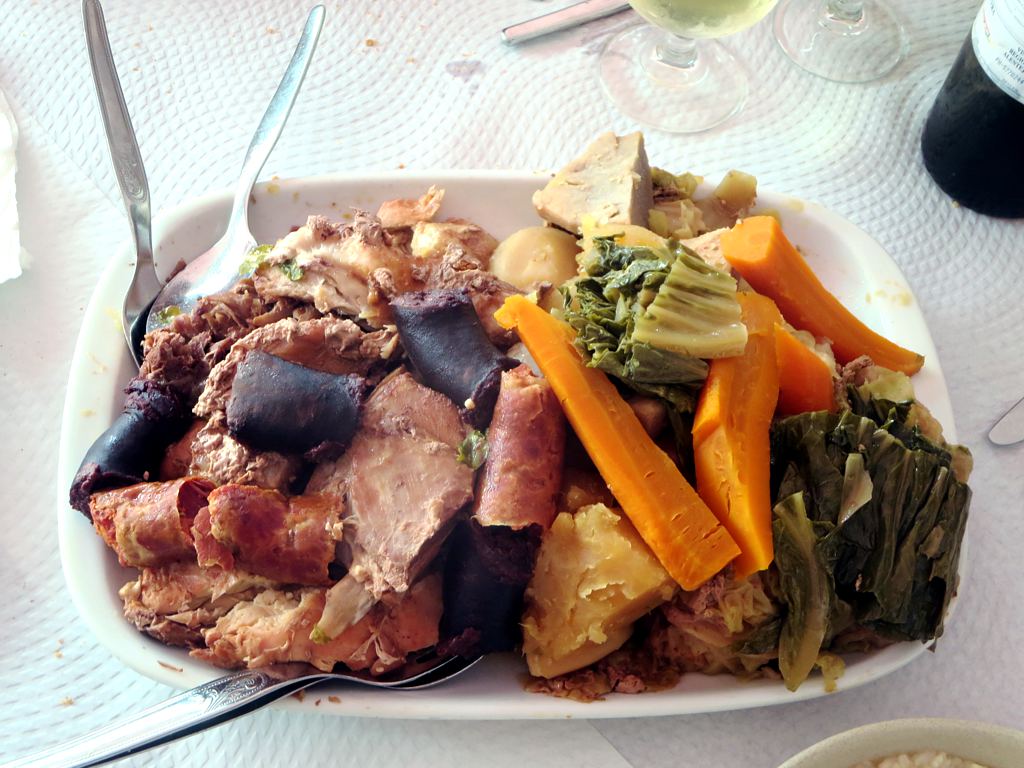

What is cozido das Furnas?
Cozido das Furnas belongs to the family of cozido à portuguesa, a substantial stew made with several meats, sausages and vegetables. Its distinctive character comes not only from the ingredients but from the heat source. In Furnas, volcanic activity allows the pot to cook slowly without a conventional fire.
Official Azores tourism information commonly lists beef, pork and chicken, together with sausages and vegetables. Depending on the restaurant, the pot may contain chouriço, morcela, bacon, potatoes, sweet potato, carrots, cabbage or taro. Not every serving includes exactly the same items and proportions vary.
The long cooking time blends the juices without requiring a complicated sauce. The result is generous, soft and comforting. It is food for sharing or for arriving genuinely hungry; a full portion can feel very heavy when combined with several starters.
How the volcano cooks the stew
The Furnas Lake fumarolic field lies on the northern shore of the lake, inside the volcano’s caldera. Official information describes gas emissions mixed with hydrothermal surface water and temperatures around 97°C in the area. That geothermal heat is channelled through prepared cooking holes used for the pots.
Meat, sausages and vegetables are arranged in a large, resistant pot, often in layers.
The pot is tightly closed and protected to keep out soil and retain heat and steam.
It is lowered into a hole in the geothermal ground and covered for several hours.
Staff retrieve the pot and the restaurant transports it back for service.
Official sources give cooking times ranging from approximately five to eight hours. This is not a serious contradiction: pot size, quantity, the desired result and each restaurant’s organisation all affect the schedule. The important point is that the stew cooks slowly and steadily.
The site is managed by the municipality of Povoação. It is not an informal space where every visitor may dig a hole. There are operating hours, staff and rules governing both pot reception and access to the fumarolic field.
Does cozido taste of sulphur?
This is one of the questions travellers ask most often. The Furnas landscape has a noticeable mineral smell because of volcanic gases, but a correctly sealed cozido should not taste strongly of sulphur. The food remains protected inside the pot. Its flavour comes primarily from meat, sausages and vegetables cooking together.
Some diners notice a subtle difference from a stew prepared in a conventional kitchen; others do not. Expectations play a role. Try it without searching for an overwhelming volcanic flavour. The remarkable part is the method, the landscape and the way the Furnas community has learned to use heat from below ground.
Where to eat cozido das Furnas
Several restaurants in Furnas serve cozido, but not all offer it at every hour or on every day. The pot must be prepared in advance, spend hours in the geothermal field and return in time for service. A reservation is therefore much more important than it would be for a dish cooked to order.
When booking, confirm the time, number of diners and whether the restaurant serves individual portions or requires a minimum order. Ask about alternatives for children or guests who avoid certain meats. Traditional cozido includes several animal products and is not suitable for a vegetarian diet.
Most visitors eat it at lunchtime. A sensible plan is to explore the lake and fumaroles first, watch the pots being retrieved if your timing coincides and then continue to the restaurant. Our full Furnas guide brings together the calderas, thermal baths and nearby stops.
Practical tip: avoid scheduling a thermal bath immediately after a very large meal. Leave time for a walk through the village or a rest before entering the hot pools.
How to plan a visit to Furnas
Furnas deserves more than a meal stop. The valley combines fumaroles, hot springs, gardens, viewpoints and Furnas Lake. With half a day, visit the geothermal field, have lunch and walk through the village. A full day gives you room for a garden or thermal experience without rushing.
Weather changes quickly on São Miguel. Rain does not necessarily prevent the restaurant from serving cozido, but it can make the lakeside walk less comfortable. Carry a waterproof layer and shoes with good grip even when the forecast looks stable.
Use our guide to the best things to do in São Miguel and save your stops in the São Miguel GPS map. Furnas is in the eastern part of the island, so it makes sense to group it with nearby places rather than crossing São Miguel several times in one day.
Other foods cooked with geothermal heat
The fumarolic field is not used only for cozido. Official tourism information also mentions bacalhoada, feijoada and rice pudding, as well as corn and chestnuts cooked in thermal areas. These preparations show that Furnas geothermal cooking is a wider local practice rather than a single famous dish.
Cozido remains the clearest symbol of that relationship. A pot turns a geological phenomenon into something edible. Understanding the process gives visitors more than a photograph of steam rising from the ground or a plate ordered without context.
What to expect at the table
Service normally includes a generous selection of meat, sausages and vegetables. Flavours mingle, but each ingredient keeps some of its identity. Cabbage and potatoes absorb fat and juices, sausages contribute spice, and beef and pork give the dish its depth.
You do not need to finish every component. Take small portions and decide which parts you enjoy most. Sharing makes it easier to compare flavours and helps reduce waste. A light starter and a local dessert are more than enough to complete the meal.
Frequently asked questions about cozido das Furnas
How long does cozido das Furnas take to cook?
Official references place the cooking time at several hours, normally between five and eight. It varies with pot size, quantity and the method used by each establishment.
Is the stew cooked in volcanic water?
No. The pot is sealed, protected and placed in a hole where it uses steam and geothermal heat from the ground.
Do I need to reserve a restaurant?
Yes, advance booking is strongly recommended. The dish requires a long preparation and restaurants often plan quantities and serving times ahead.
Does cozido das Furnas taste of sulphur?
It should not have a strong sulphur taste when the pot is properly sealed. Meat, sausages and vegetables remain the dominant flavours.
Is cozido das Furnas vegetarian?
Traditional cozido is not vegetarian because it contains several meats and sausages. Ask about alternatives, but do not assume a plant-based dish uses the same pot or process.
Can visitors watch the pots being removed?
It is sometimes possible to see activity in the fumarolic field, but times depend on restaurants and site operations. Confirm locally on the day of your visit.
Editorial review: July 2026. Cooking times, access, fees and services at the fumarolic field may change; confirm current information before travelling.
Sources: Azores Tourism, Azores Natural Parks and the official São Miguel food information. Photographs: David Stanley, CC BY 2.0 and Sara Araújo Marques, CC BY-SA 4.0.
Original editorial content by Visitar Azores. Unauthorised reproduction is not permitted.