
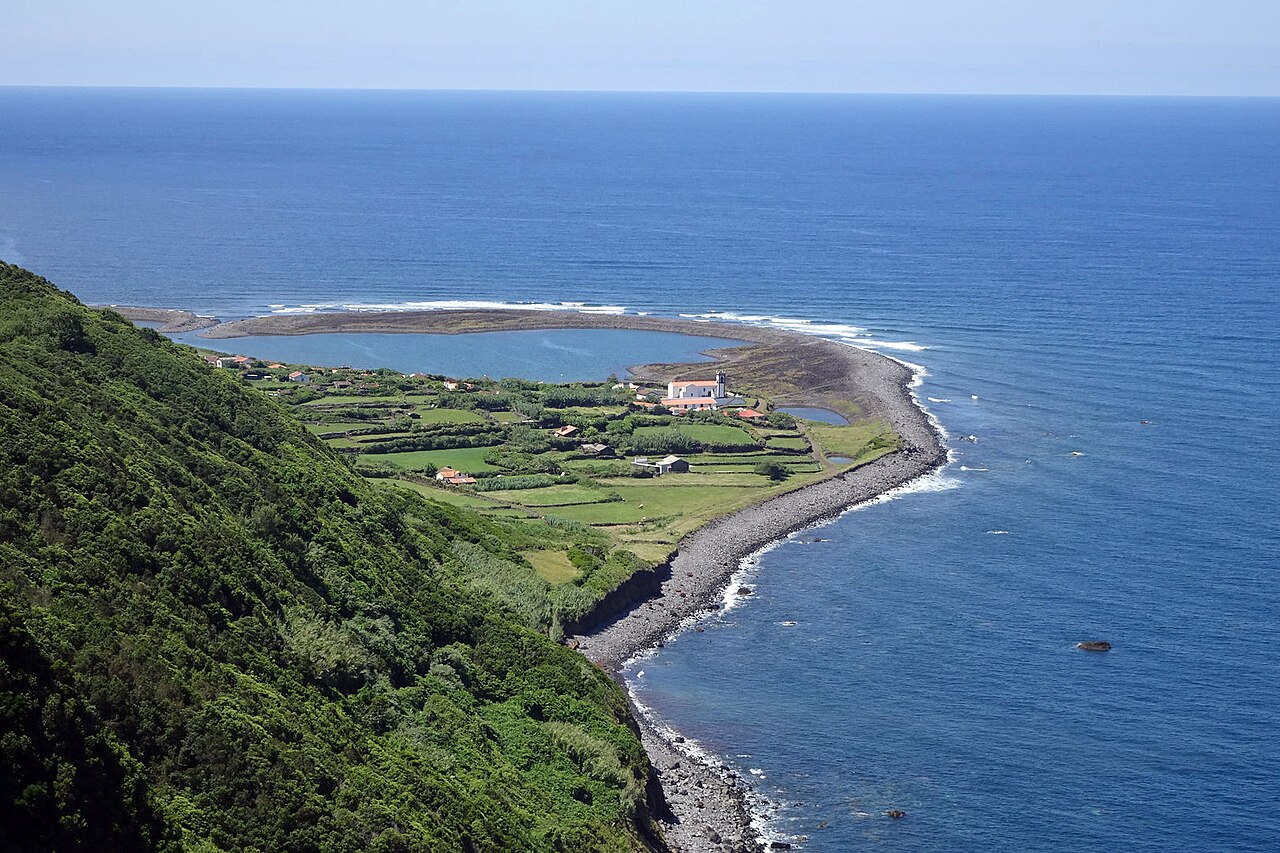
The fajas of Sao Jorge are one of the most distinctive geographical features in the Azores and probably one of the most unusual coastal landscapes in Europe. These flat strips of land sit at the foot of cliffs that can rise up to 700 meters above the ocean. If you plan to visit Sao Jorge, discovering its Fajas Sao Jorge landscapes is the number one reason to go.
What exactly is a faja in Sao Jorge?
A faja is a strip of relatively flat land at the base of a coastal cliff. Fajas are formed in two main ways: by massive rockfalls that create a platform when they collapse towards the sea, or by lava flows that spread horizontally from the cliff. For geological context, Wikipedia has a useful article about fajas.
Sao Jorge has more than 40 catalogued fajas, mostly along the north and south coasts. Their number and size are unmatched in the archipelago. What makes the Fajas Sao Jorge so memorable is their scale: cliffs of 400 to 700 meters topped with green pastures, with the fajas appearing as narrow strips between black rock and deep blue ocean.

Human history of the Sao Jorge fajas
For centuries, the people of Sao Jorge found that the fajas offered exceptional conditions: fertile soil, a milder microclimate than the high ridges and direct access to the sea for fishing. Cut off from the rest of the island by cliffs, these communities developed a largely self-sufficient way of life, growing vegetables and grapes and keeping livestock. Some fajas had dozens of families; others only three or four houses.
Today, many fajas are abandoned or semi-abandoned, but several have been recovered for ecotourism and rural stays, becoming unique places to sleep with ocean views and no easy road access.
The most important fajas in Sao Jorge to visit
| Faja | Access | Known for |
|---|---|---|
| Faja da Caldeira de Santo Cristo | On foot around 2h / boat in summer | Brackish lagoon and the endemic Santo Cristo clam |
| Faja dos Cubres | On foot around 1.5h | Nature reserve, wetland and biodiversity |
| Faja do Ouvidor | By road / short walk | Natural pools and summer swimming |
| Faja da Caldeira | On foot around 2h | Freshwater waterfalls over volcanic rock |
| Faja dos Tijolos | On foot / boat | Remote, authentic and almost uninhabited |
- Faja da Caldeira de Santo Cristo: the most famous faja. It has a brackish lagoon and is home to the Santo Cristo clam, an endemic species. Access is via the PR1 SJO trail.
- Faja dos Cubres: a wetland and nature reserve with exceptional birdlife and flora. It connects with Santo Cristo through a spectacular coastal trail.
- Faja do Ouvidor: volcanic natural pools, accessible for swimming in summer. One of the easiest fajas to include in a road trip.
- Faja da Caldeira: known for freshwater waterfalls dropping over the rocks, with a wild and romantic atmosphere.

How to reach the fajas of Sao Jorge
The most important fajas of Sao Jorge are usually reached on foot by trails descending from the ridge, with hikes of 1 to 3 hours, or by boat from Velas in the summer months. The descent is not technical, but it can be physically demanding: 400 to 600 meters of elevation change on wet and slippery terrain. Hiking boots and poles are strongly recommended. Combine this visit with hiking in Sao Jorge to make the most of the trails.
Once you reach a faja, the feeling of isolation and beauty is intense: the sound of the sea, the smell of Atlantic vegetation and the huge cliffs above your head. There is no comparable experience in the Azores.
Best time to visit the Sao Jorge fajas
The best time to visit the Fajas Sao Jorge is from May to October. In summer, especially July and August, trails are generally in better condition and boat services from Velas may operate to some fajas. Spring, from April to June, is spectacular because of the lush vegetation and blue hydrangeas. Avoid winter if possible: descent trails can be dangerous with heavy rain and boats usually do not operate.
Practical tips for visiting the fajas of Sao Jorge
- Start early: popular trails become busier in summer. Leaving before 8 a.m. gives you a much quieter experience.
- Bring water and food: most fajas have no shops or restaurants. Santo Cristo may have a small seasonal bar, but do not rely on it.
- Wear hiking boots: the terrain is volcanic, wet and slippery.
- Check the weather: fog can cover the descent without warning. Always carry a waterproof layer.
- Respect wildlife and plants: many fajas are protected areas. Do not pick plants, disturb animals or make fires.
FAQ about the fajas of Sao Jorge
Can you sleep in the fajas?
Yes. Faja da Caldeira de Santo Cristo has rural houses where you can stay. Sleeping in a faja is an extraordinary experience: little light, limited mobile coverage and the sound of the ocean.
How long does it take to reach Faja da Caldeira de Santo Cristo?
From the start of the PR1 SJO trail, the descent takes around 1.5 to 2 hours. The return climb can take 2.5 to 3 hours. Allow 5 to 6 hours for the full outing.
Can you visit the fajas without hiking?
In summer, yes, some can be reached by boat from Velas. Check seasonal departures locally because availability changes each year.
Combine the fajas with a tasting of the famous Sao Jorge cheese and with whale watching from Pico, just a short ferry ride away.
🌊 See tours and excursions in Sao Jorge with GetYourGuide – kayaking, guided hikes and faja experiences.
🚗 Car rental in Sao Jorge with DiscoverCars – useful for reaching the more remote fajas.
Compare agencies, book early and keep your route flexible with cancellation options.

