
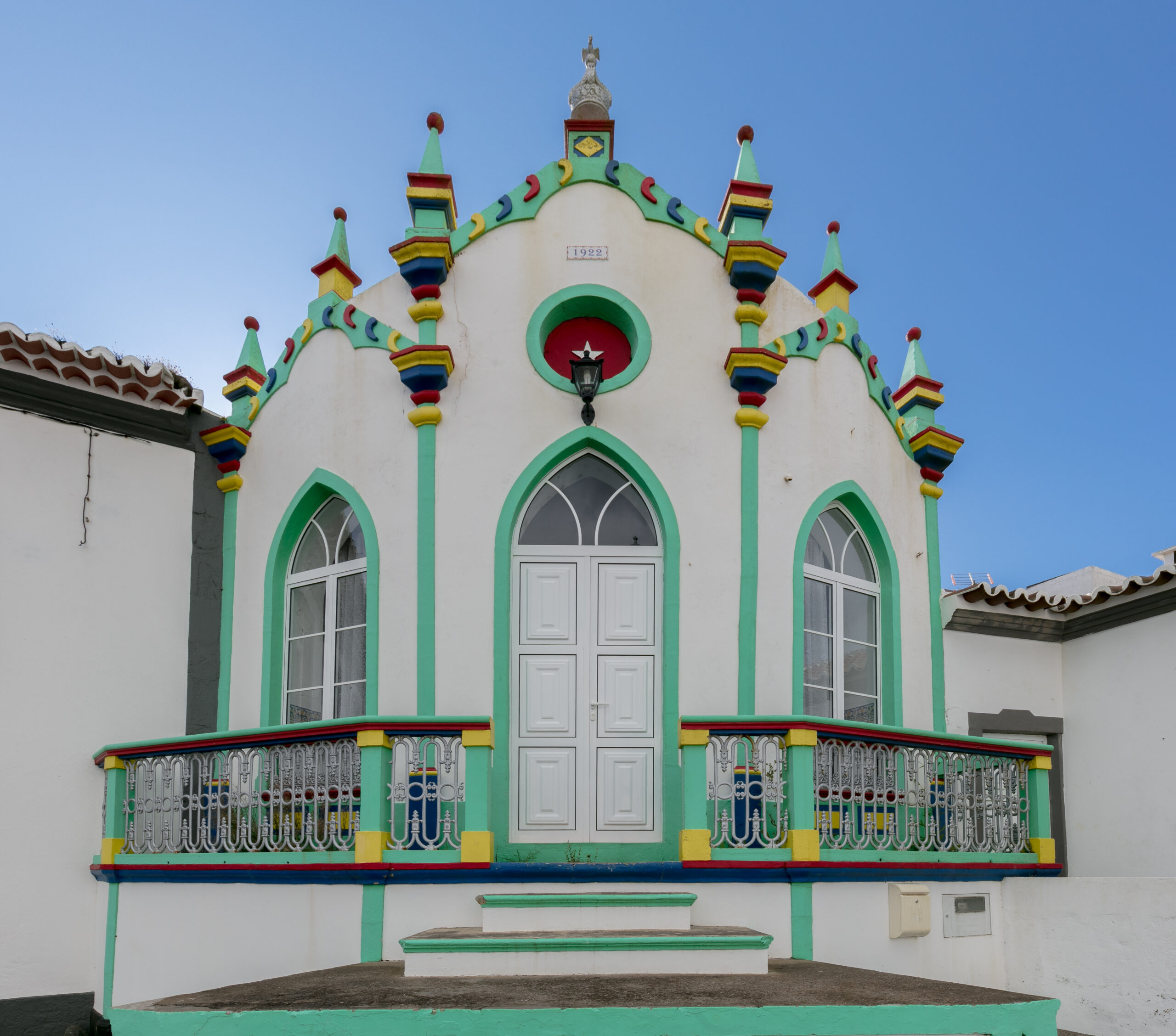
Holy Spirit Soups, known in Portuguese as Sopas do Espírito Santo, are far more than a traditional Azorean recipe. They are food, but also community memory, religious celebration, hospitality and one of the clearest expressions of island culture in the Azores. If cozido das Furnas explains the volcanic side of São Miguel, Holy Spirit Soups explain the social side of the archipelago.
The tradition belongs to the Festas do Divino Espírito Santo, celebrations found across the Azores with local variations. Around processions, coronations, small chapels known as impérios, communal meals and food distribution, the soups become a symbol of sharing. That is why they should be understood slowly: they are not simply something to order, but a ritual meal many Azoreans recognise as part of their identity.
What are Holy Spirit Soups?
Holy Spirit Soups are traditional soups associated with the Holy Spirit festivals in the Azores. The base changes from island to island, parish to parish and family to family, but certain elements often appear: meat broth, bread, mint or spearmint, cooked meat and, in some versions, cabbage, spices or local accompaniments. The bread absorbs the broth, turning the dish into something substantial and complete.
Each island adds its own character. Some versions are simpler; others are richer in meat and seasoning. A documented traditional version from Graciosa, for example, includes beef, chicken, liver, cooked blood, cabbage, mint, cinnamon and bread. Elsewhere, the composition may change, but the central idea remains the same: cooking in order to share.
The Divine Holy Spirit festivities
The Festas do Divino Espírito Santo are among the most important cultural expressions in the Azores. They combine religion, music, food, processions, symbolic objects and neighbourhood participation. The small buildings called impérios, visible on several islands, are used to display or protect elements connected with the cult, such as the crown and flag. Around them, communities organise meals, food distribution and celebrations that vary from place to place.
The most common festive cycle takes place after Easter and around Pentecost, although dates vary according to each island and parish. For travellers, this means you cannot always treat the dish like a fixed restaurant attraction. It is better to check local calendars, ask tourism offices or look for posters announcing village festivities.
Why the soups matter
The value of Holy Spirit Soups is not only in the ingredients. It is in the act of bringing people together and sharing food. In an archipelago where each island has historically lived with a degree of isolation, mutual help and community ties matter deeply. The Holy Spirit festivities express that idea through an open table, food distribution and collective participation.
If your trip coincides with one of these celebrations, the experience can be as memorable as a viewpoint or a hiking trail. Watching large pots being prepared, seeing how food is served and noticing how local people participate gives you access to a layer of the Azores that short itineraries often miss.
When to look for them
Mainly in the festive period after Easter and around Holy Spirit celebrations, although each island and parish follows its own calendar.
Where to experience them
In villages, impérios, Holy Spirit houses and local celebrations on islands such as Terceira, São Jorge, Graciosa, São Miguel and beyond.
How to behave
With respect and discretion. This is a community and religious tradition, so ask, observe and follow local guidance.
Holy Spirit Soups and other Azorean foods
If you are interested in local food, Holy Spirit Soups connect naturally with other Azorean dishes and products. Read them alongside cozido das Furnas, São Jorge cheese, Pico wine or bifanas in the Azores. Each tells a different story: volcanoes, pastures, vineyards, popular food and community celebration.
On a real trip, do not chase the soups as if they were a fixed attraction. Include them if the calendar fits. If you are travelling during festival season, ask locally on the island where you are staying. If not, you can still visit impérios, learn about the tradition and taste other regional foods that complete the culinary map of the Azores.
Practical tips for travellers
If your visit coincides with a Holy Spirit celebration, arrive with time and observe how local people move through the event before joining in. These gatherings are not designed as tourist shows, so the best approach is quiet curiosity: ask politely, follow local instructions and avoid blocking processions, kitchens or serving areas for photographs. If you are travelling outside the main festive period, you can still notice the tradition through the colourful impérios found in many towns and villages. They are small landmarks, but they explain a large part of the Azorean relationship between faith, neighbourhood life and food.
FAQ about Holy Spirit Soups in the Azores
What exactly are Holy Spirit Soups?
They are traditional soups linked to the Divine Holy Spirit festivities in the Azores. They usually include meat broth, bread, mint or spearmint and cooked meat, with variations by island.
Are Holy Spirit festivals celebrated on every island?
The tradition exists across the archipelago, although each island and parish has its own dates, impérios and local customs.
When can travellers try them?
Mainly during the festive cycle after Easter and around Pentecost, although local celebrations may happen on different dates.
Are they a restaurant dish?
They may appear in some food contexts, but their main meaning is communal and festive. The most authentic setting is a local Holy Spirit celebration.
Are the recipes the same on every island?
No. Ingredients, broth intensity and accompaniments vary. That diversity is part of the tradition’s richness.
Sources consulted: Portal da Açorianidade on the Divine Holy Spirit festivities, official Azores tourism event information, DGADR on Sopa do Espírito Santo and Wikimedia Commons for the image.