
São Jorge cheese is one of the most distinctive flavours of the Azores: aged, intense, slightly spicy and closely tied to the island’s green pastures. It is not simply a “traditional cheese”. It is a product with Protected Designation of Origin status, a history shaped by local dairy farming and a character you notice from the first slice.
The essentials: authentic Queijo São Jorge PDO is produced on São Jorge Island from raw cow’s milk. It comes in a large wheel, has a firm or semi-hard texture, small irregular holes and a minimum ageing period of three months. To choose the genuine product, look for the PDO seal, ask how long it has been aged and do not confuse it with generic cheeses sold as “queijo da ilha”.
If you visit São Jorge, try it in Velas, local shops, informal restaurants or rural accommodation where it is served without unnecessary embellishment. It is one of those edible souvenirs that genuinely tells you something about the island.
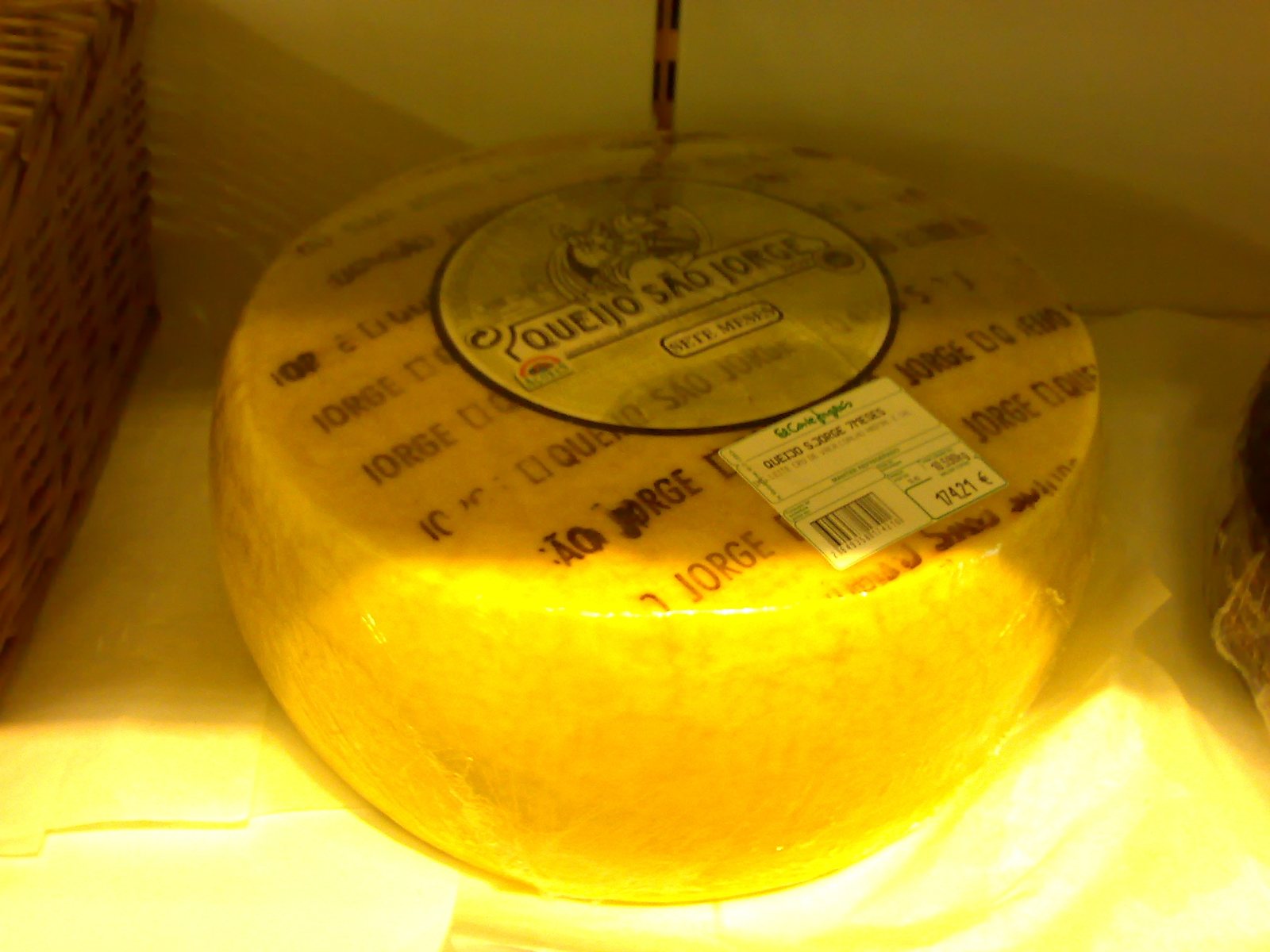
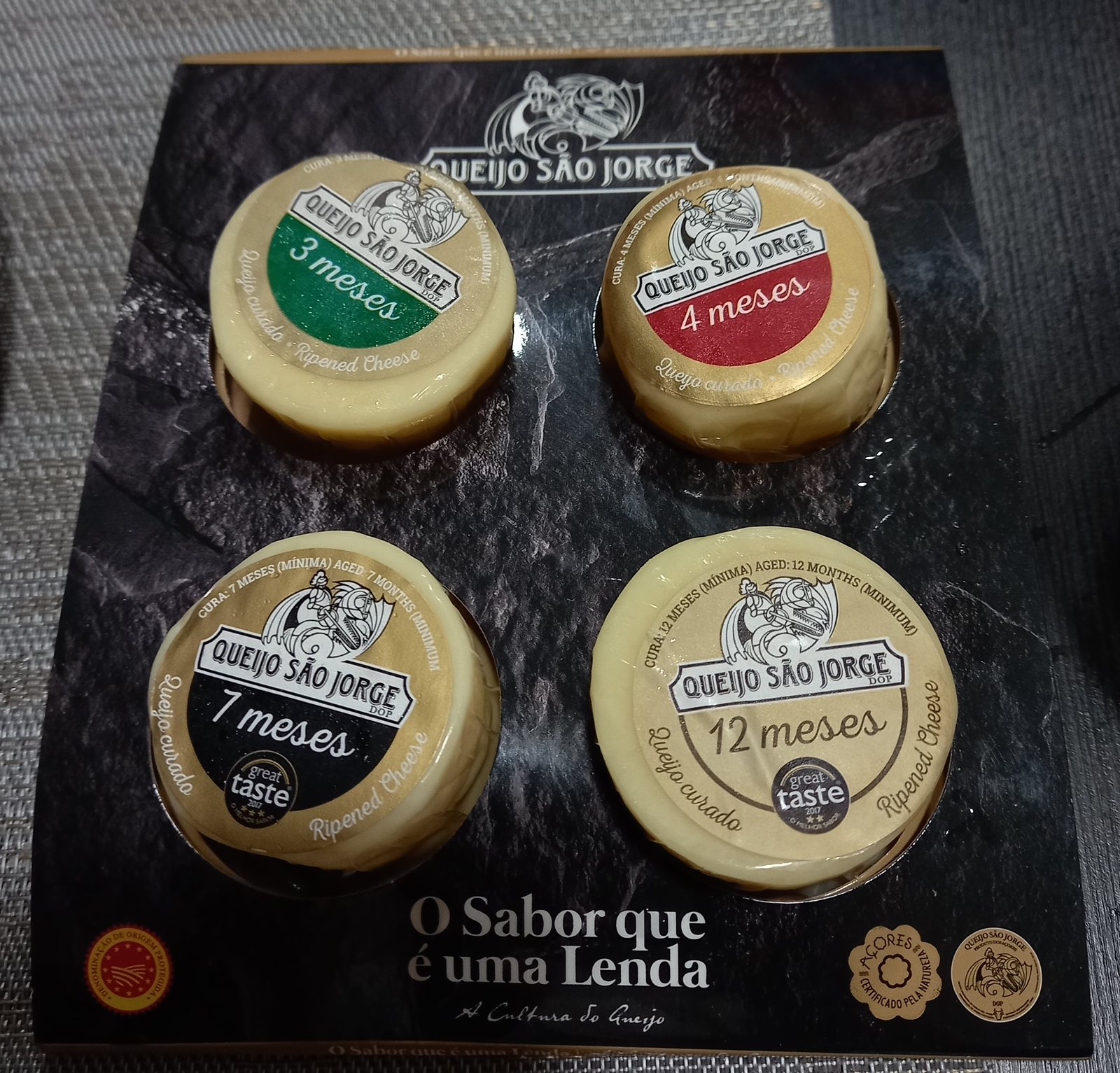
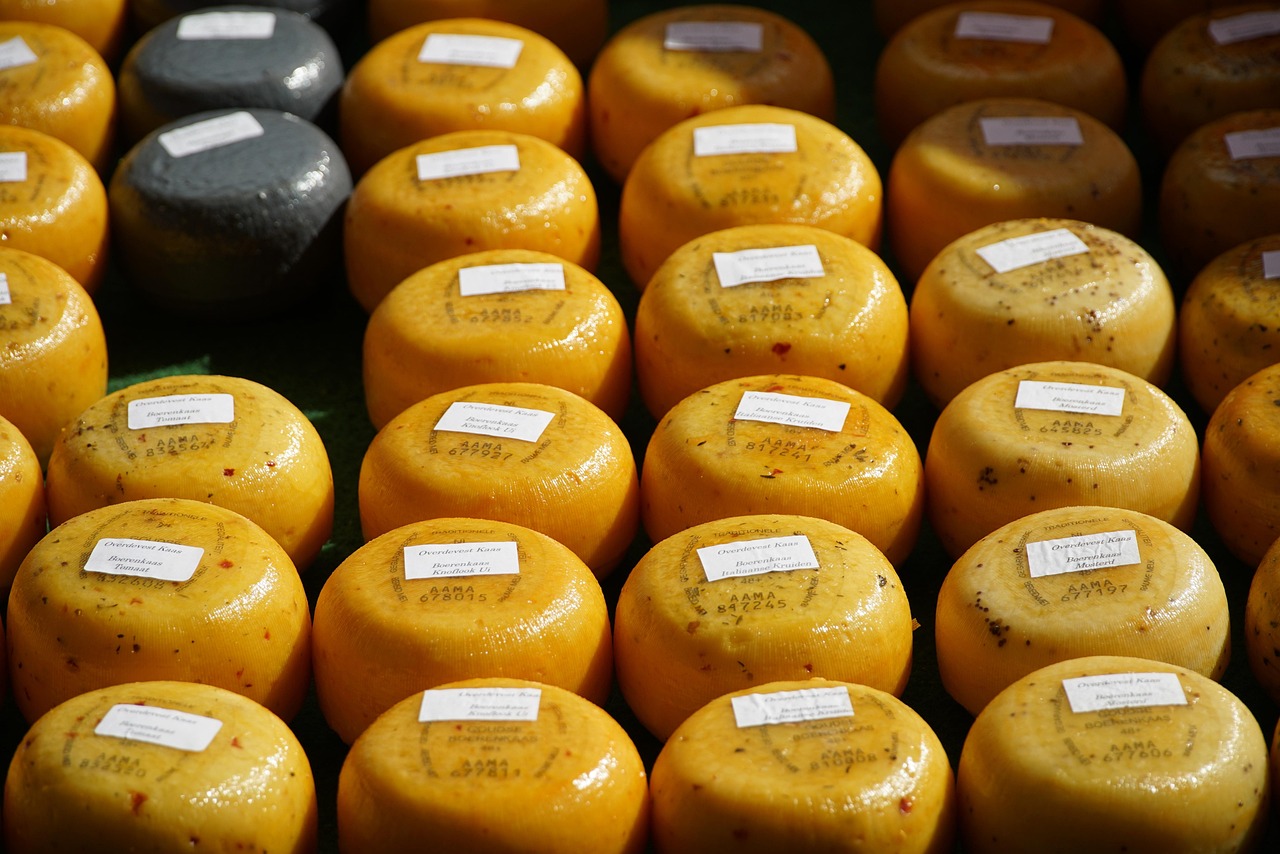
What is São Jorge cheese?
Queijo São Jorge PDO is a Portuguese cheese from the Azores produced on São Jorge Island. It is made from raw cow’s milk, pressed and aged until it develops a firm, yellowish paste with small irregular holes. Its flavour ranges from mild and even buttery in younger cheeses to stronger, saltier and spicier as it matures.
Origin is crucial. São Jorge is an island of fajãs, cliffs and damp pastures, with an economy closely connected to milk production. The cheese grew from this combination of Atlantic weather, livestock farming and local expertise. When you taste it on the island, you are not only sampling a recipe; you are tasting an important part of everyday life on São Jorge.
How to recognise authentic Queijo São Jorge PDO
Look for three things: the PDO seal, a clear reference to São Jorge and information about the ageing period. Authentic cheese is generally sold as wedges or portions cut from a large wheel. If you plan to take some home, ask the shop to explain the maturation and package it properly for the journey.
The traditional specification describes São Jorge cheese as an aged, firm product made exclusively on the island. It also establishes a minimum maturation period of 90 days. Shops may offer younger and older varieties; the longer the ageing, the more pronounced the flavour.
Practical tip: if you want to pack cheese in your luggage, buy it near the end of your trip, request vacuum packaging when available and check your baggage conditions. A carefully chosen wedge does not take up much room and makes a far more meaningful souvenir than a decorative object.
Where to buy and taste cheese on São Jorge
Velas is the easiest place to start. It has shops, restaurants and accommodation from which you can organise the rest of your time on the island. You will also find the cheese in local supermarkets, markets, small regional produce shops and restaurant menus. There is no need to seek out an elaborate tasting: good bread, cheese, local wine or beer and an unhurried table are often all you need.
If you are exploring fajãs and viewpoints, take a little cheese for a simple picnic, but always respect the surroundings, leave no litter and avoid unpacking food in strong winds or sensitive areas. São Jorge is best enjoyed in layers: landscape, walking, local food and conversations with the people who live there.
Where to stay on São Jorge
Velas is an excellent base for buying local produce and travelling around the island. Accommodation is limited in summer, so booking early gives you more options with flexible cancellation and a better choice of locations.
Find accommodation on São JorgeRent a car
A car makes it much easier to connect shops, fajãs, viewpoints and restaurants without depending on timetables. São Jorge has a smaller rental fleet than the larger islands, so waiting reduces your options.
Compare car hire in the AzoresSave places to your GPS
Save Velas, the fajãs, viewpoints and useful stops before setting out. This helps you avoid improvising with patchy coverage or wasting time searching along the way.
Open the São Jorge GPS mapHow to taste it: ageing, flavour and pairings
If you are trying it for the first time, begin with a medium-aged cheese. You will notice a firm paste, a milky aroma, saltiness and the slightly spicy character that makes it so recognisable. With longer ageing, the cheese becomes more assertive and may be drier, more crumbly and more intense.
It pairs especially well with good bread, mild preserves, honey, nuts, Pico wine or an Atlantic white wine. It also works grated or melted in cooking, but while you are on the island the most honest way to enjoy it is on its own or with something simple. Do not overwhelm it with too many ingredients; the cheese already has a voice of its own.
A simple food route on São Jorge
A food-focused day can begin in Velas, continue with buying cheese to take home, move on to viewpoints and finish with a meal featuring local products. Combine this guide with our pages about visiting São Jorge Island, the fajãs of São Jorge and the São Jorge GPS map to build a much more practical itinerary.
For travellers looking for a less touristy experience, cheese is a useful doorway into local life. Asking about ageing, producers or the ways people eat it often starts genuine conversations, and on a small island those exchanges are worth more than any perfect checklist.
Frequently asked questions about São Jorge cheese
What makes São Jorge cheese special?
It is a PDO cheese from São Jorge Island, made from raw cow’s milk and aged to develop a firm, salty and slightly spicy flavour that becomes stronger over time.
How can I tell if it is authentic Queijo São Jorge PDO?
Look for the PDO seal, a clear reference to São Jorge and information about the ageing period. If in doubt, ask whether it is PDO-certified or simply a generic island cheese.
Where can I buy São Jorge cheese on the island?
Velas is the most convenient place to begin. You can also find it in local shops, supermarkets, restaurants and stores selling regional products.
How long is São Jorge cheese aged?
The traditional minimum ageing period is three months. Longer maturation produces stronger flavours and a more pronounced texture.
Can I take São Jorge cheese on a plane?
It can generally be carried in luggage, ideally vacuum-packed and bought near the end of your trip. Always check the rules of your airline and destination.
What pairs well with São Jorge cheese?
It pairs well with bread, honey, nuts, Atlantic white wines and Pico wine. Keep accompaniments simple when serving a well-aged cheese.
Keep exploring São Jorge
Plan your island route
Save Velas, fajãs, viewpoints and useful stops before setting out.
Open the São Jorge GPS mapComplete your trip
Combine local food with fajãs, trails and peaceful villages.
São Jorge travel guideEditorial review: this guide was reviewed in July 2026 to help travellers buy, taste and recognise São Jorge cheese during a real trip through the Azores. Products, opening times and availability may change.
Sources and credits: information was checked against the public specification for Queijo São Jorge PDO and legal references for the protected designation. Images linked from Wikimedia Commons: Queijo São Jorge inteiro, Queijo São Jorge – 4 pcs and Sao Jorge Cheese.