
Whale watching in the Azores is not a matter of choosing any island and expecting a perfect postcard. Species change with the season, sea conditions decide whether boats leave, and each port fits a different itinerary. This guide compares months and islands so you can choose the right trip without impossible promises.
Quick answer: cetaceans can be seen throughout the year in the Azores. Sperm whales and several dolphin species are regular sightings, while migratory baleen whales such as blue and fin whales have better odds during the spring passage. Pico and Faial have the strongest whaling heritage; São Miguel offers the largest choice of departures and simple logistics.
To choose an island and departure, read Whale Watching in Pico (Azores): Complete Guide.
Which species you can see and when
Deep water close to shore puts boats in the search area soon after departure. These are still wild animals: no particular species and no sighting can be guaranteed. Your month changes the odds, not the natural behaviour.
The spring migration
From roughly March to June, the chance of encountering large baleen whales increases as they migrate through the North Atlantic. Blue, fin and sei whales may appear in this window, with substantial variation between years. Spring is the most interesting season when a great whale is the priority, although the sea can be less settled than in summer.
Year-round residents and regular visitors
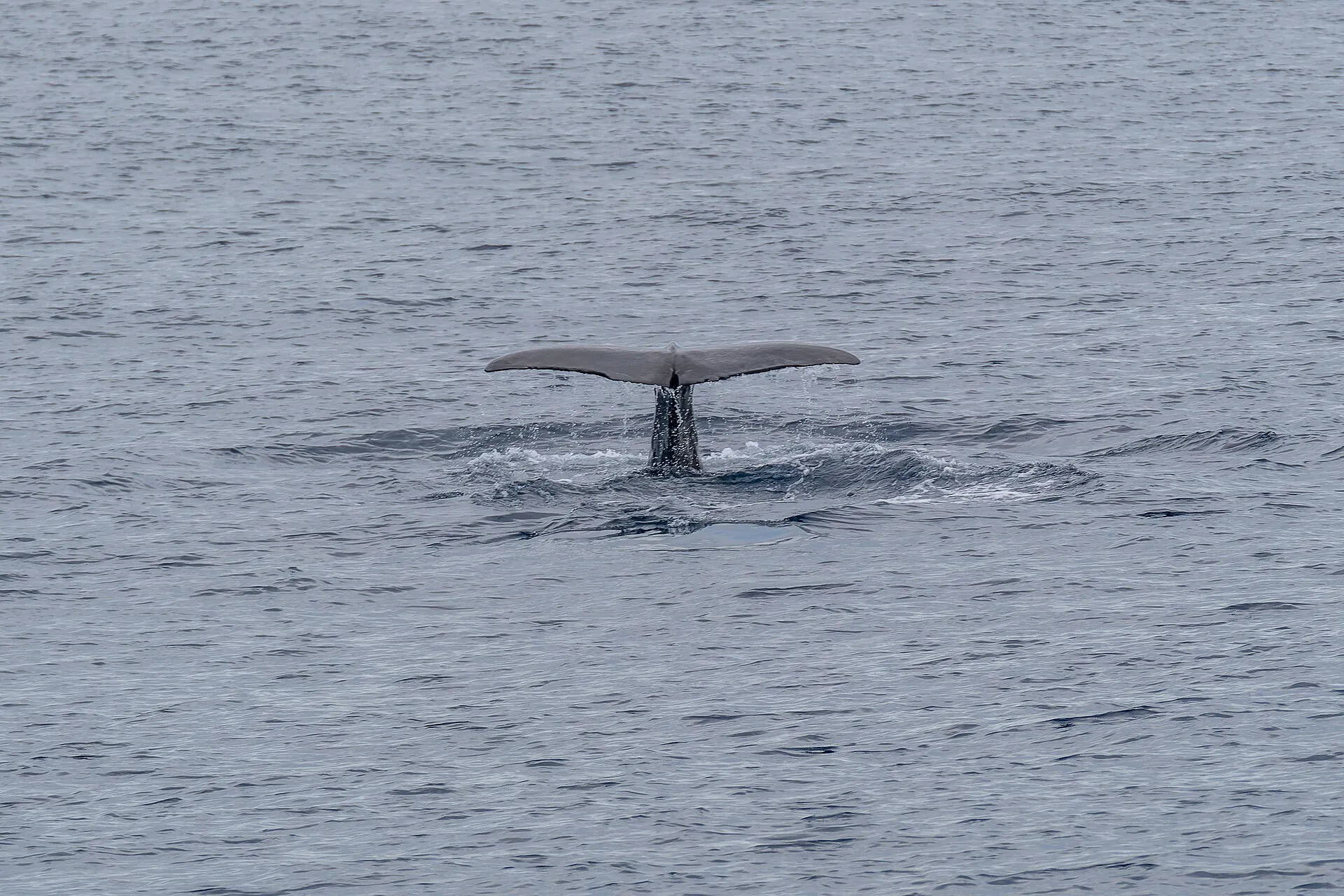
The sperm whale is the emblematic species and can be encountered in every season. Common, bottlenose and Risso’s dolphins are also regular. Atlantic spotted dolphins become more frequent in warmer water. Official tourism portal Visit Azores lists more than twenty cetacean types among resident and migratory species, but they do not all occur with equal frequency.
| Period | Potential highlight | What to consider |
|---|---|---|
| March-June | Migratory great whales and sperm whales | High biological interest, variable sea |
| July-September | Sperm whales and diverse dolphins | Higher demand and generally easier conditions |
| October-February | Resident species | Fewer departures and more weather cancellations |
Which island to depart from: Pico, Faial, São Miguel or Terceira
Pico has the most visible connection to whaling heritage. Lajes do Pico and Madalena combine well with vineyards, the coast and the mountain. For practical detail without duplicating this island comparison, see our guide to whale watching from Pico.
Faial is convenient when you stay in Horta or combine the central triangle with Pico and São Jorge; the Faial island guide helps fit the trip around the rest of the island. São Miguel has the broadest choice of accommodation, flights and operators, with common departures from Ponta Delgada and Vila Franca do Campo; use the São Miguel guide to plan the remaining days. Terceira works well when it is already part of the itinerary and you do not want another flight.
Compare Pico departures, Faial trips, São Miguel whale watching and Terceira departures. Always confirm port, duration and bad-weather policy.
Compare cars for Madalena, Lajes and the vineyards without relying on transfers.
How much a whale-watching trip costs and what it includes
For planning purposes, a shared trip of around three hours commonly falls in a broad €55 to €90 adult range. Boat type, island, season and company policy change the final price. Private trips cost substantially more and do not guarantee more animals.
Check whether the rate includes a guide or marine biologist, waterproof clothing, life jacket, insurance and a second chance when no cetacean is seen. A repeat trip is not normally the same as a refund and remains subject to availability.
Compare whale-watching trips
Choose by departure port, duration, boat type and cancellation terms. Avoid accidentally booking on another island.
What the trip is like: duration, seasickness and what to bring
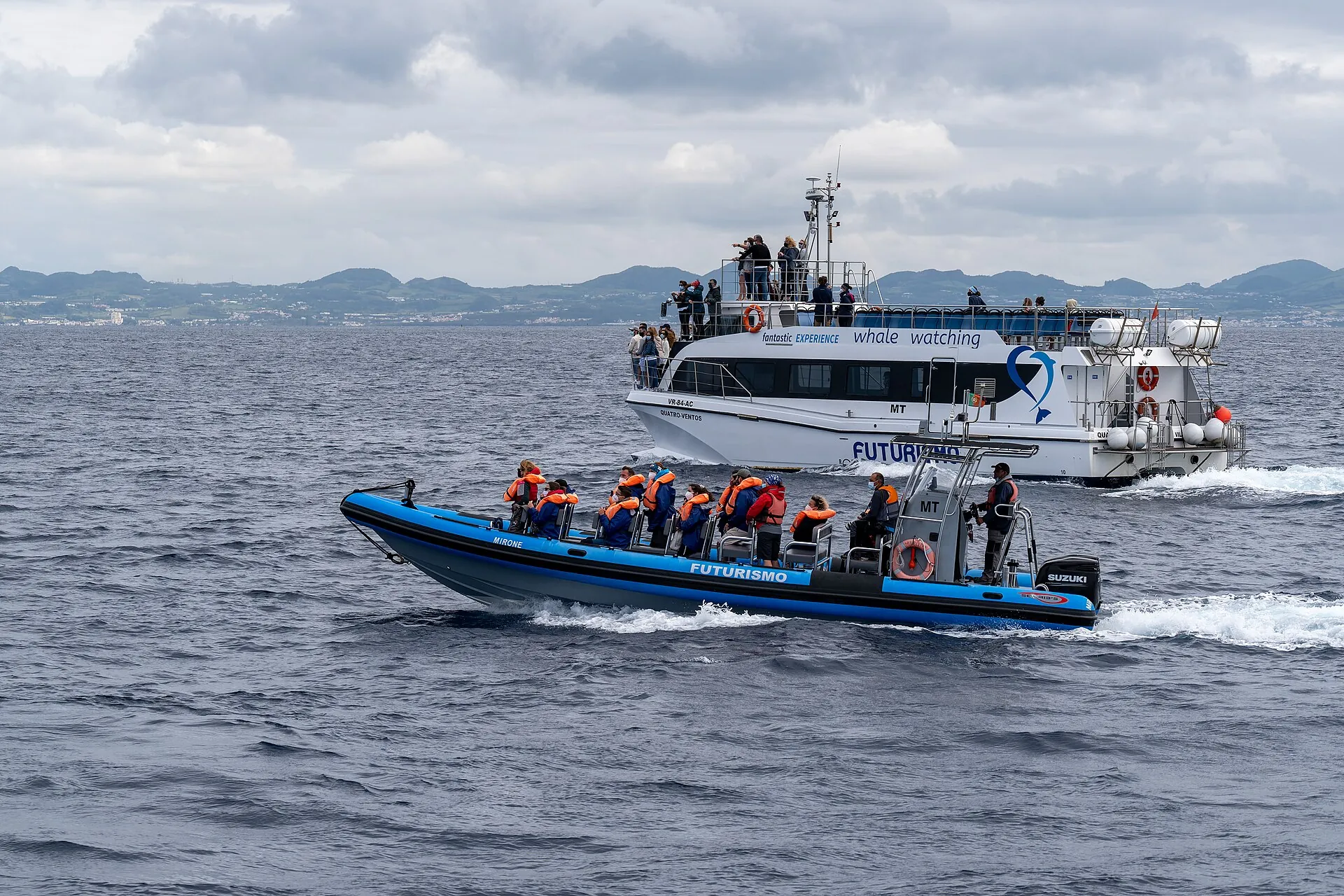
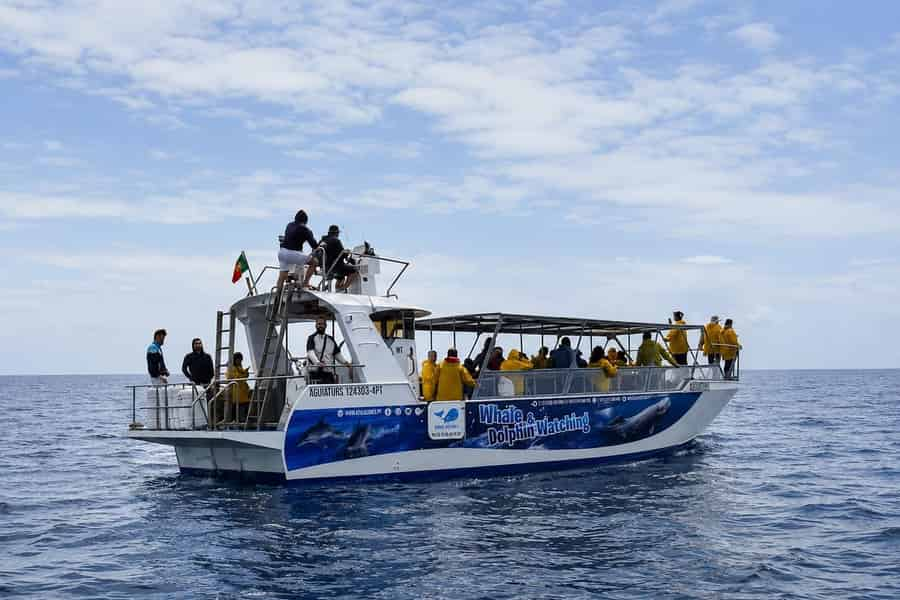
Most outings last about two and a half to three and a half hours. A safety and species briefing normally comes first. Rigid inflatable boats are agile and close to the water, but they transmit more movement and do not suit every back or every young child. Catamarans provide more stability and room.
- Bring a waterproof layer even when the morning looks clear.
- Use sun protection and secure hats, phones and cameras.
- If you get seasick, ask a healthcare professional about suitable prevention and timing.
- Eat lightly rather than boarding with a completely empty stomach.
- Leave room in the itinerary: rough sea cannot be fixed by a tight schedule.
The vigias: whaling heritage that still guides boats
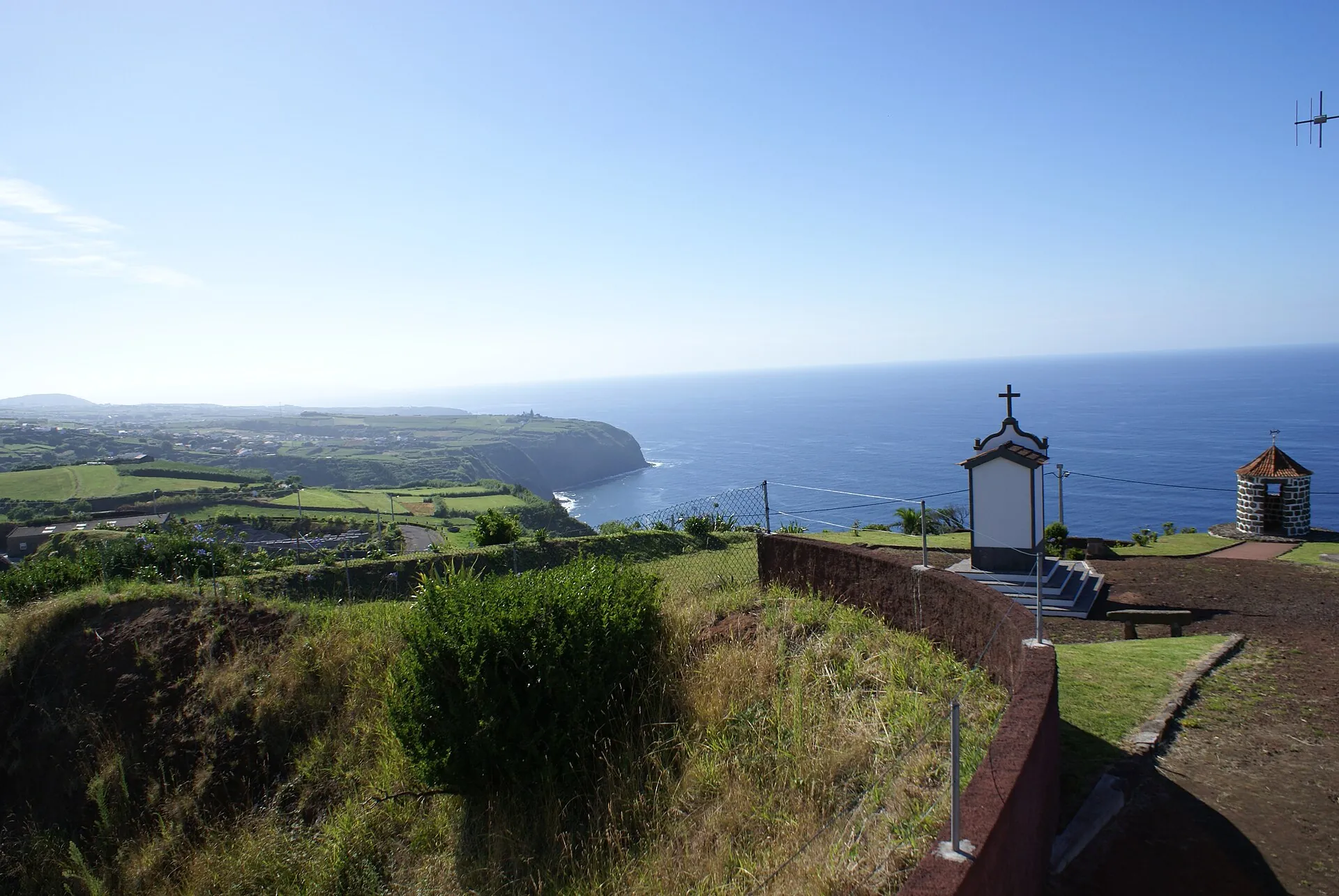
Before a tourist boat changes course, someone on land may already have read the ocean. Spotters use binoculars from elevated positions and radio an approximate location to the crew. The equipment has changed, but the method descends from the land-based lookouts of the whaling era.
Tourism redirected that knowledge. Places once used to locate whales for hunting now support controlled observation, interpretation and conservation. Official Azores tourism material notes that vigias continue to support both visitor trips and observational work.
Responsible whale watching
Tourist cetacean observation has been regulated in the Azores since 1999. The rules aim to balance economic activity, education and conservation. Choose authorised operators, accept distance and do not judge a trip by extreme proximity. A skipper who slows down, limits time with a group or leaves a sensitive situation is doing the job properly.
The Regional Directorate for Maritime Policies publishes the framework and stresses the responsibility of operators and agents. Never feed animals, demand pursuit or fly a drone without the required authorisation.
Frequently asked questions about whale watching in the Azores
What is the best month for whale watching?
Spring generally offers the better chance of migratory great whales. Sperm whales and dolphins may be seen throughout the year, with more departures and easier logistics in summer.
Which island is best?
Pico and Faial stand out for heritage and access to the central channel; São Miguel for departure choice and logistics. The best island is the one that fits your route and has suitable sea conditions.
Are sightings guaranteed?
No. These are wild animals. Some operators offer a repeat trip when no cetacean is seen, but terms and availability vary.
Is a RIB or catamaran better?
A RIB is agile and close to the water; a catamaran is usually steadier and roomier. Choose according to seasickness, mobility, children’s ages and sea conditions.
Can you go in winter?
Yes, but schedules are thinner and weather cancellations more likely. Book flexibly and keep another day available.
Related guides for your next step
Whale Watching in Pico (Azores): Complete Guide
Whale watching Pico: this guide explains the best season, departure areas, species, sea conditions and what to book before planning a trip around Pico…
Plan a whale-watching trip
Visit Pico Azores
Visiting Pico Island in the Azores: climbing Portugal’s highest volcano, UNESCO World Heritage vineyards, and whale watching. Everything you need to know about tourism…
Explore the island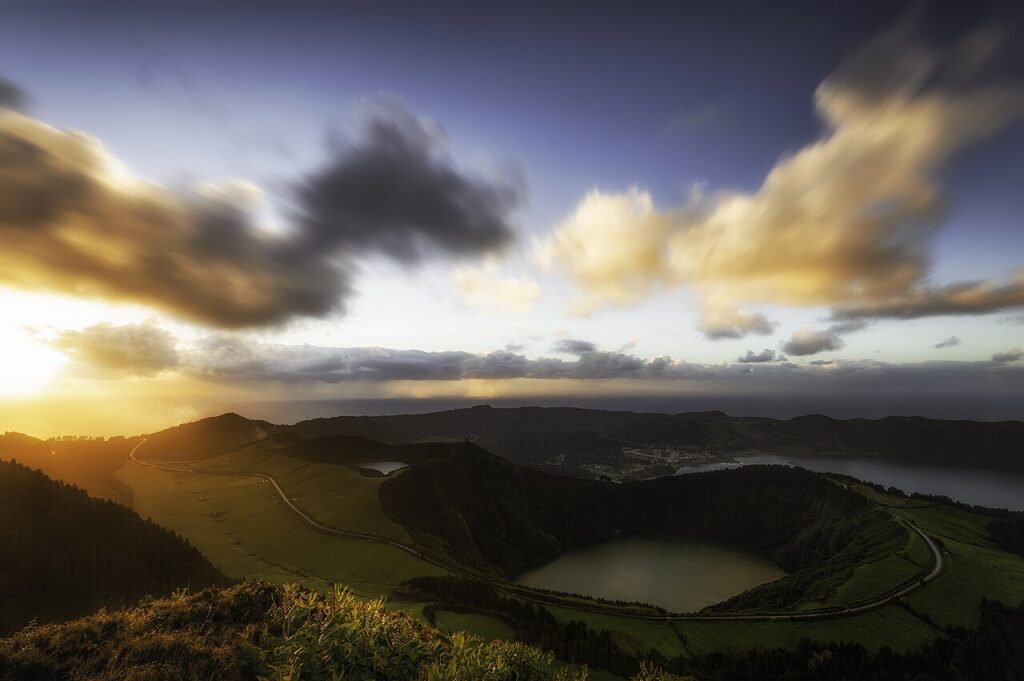
Visit Sao Miguel Azores
Visit Sao Miguel Azores: Sete Cidades, Furnas, Lagoa do Fogo, coast, viewpoints, where to stay and route ideas for a first visit. Visit Sao…
Explore the island
Best Time to Visit the Azores: Month-by-Month Travel Guide
The best time to visit the Azores depends on what you want from the trip: stable weather, whale watching, flowers, hiking, lower prices or…
Choose when to visitChoose your boat trip on the island where you are staying
Compare departures on São Miguel, Pico and Faial: each card identifies its island. Check the departure harbour and duration; inter-island travel is not included and sightings depend on natural conditions.


All Azores travel guides
Looking for an island, accommodation, routes or car rental advice? Browse our guides by island and topic, or search for exactly what you need.
Sources and credits
A RIB and catamaran during a São Miguel whale-watching trip. Photo: Jules Verne Times Two / julesvernex2.com / Wikimedia Commons (CC BY-SA 4.0)
A sperm whale begins a dive off São Miguel. Photo: Jules Verne Times Two / julesvernex2.com / Wikimedia Commons (CC BY-SA 4.0)
Vigia da Baleia lookout in Nordeste. Photo: José Luís Ávila Silveira / Pedro Noronha e Costa / Wikimedia Commons (public domain)