
Travel planningAzores
12 min read · Practical English guide

On this pageOpen guide
An Azores travel budget combines flights, accommodation, transport, food, activities and extras for specific dates. There is no universal price: the island, season, flight origin, rental conditions and number of travellers all matter. The three examples below show the assumptions and arithmetic so that you can replace them with quotes for your own holiday.
Season makes a substantial difference. Our table uses planning assumptions for high season, not year-round prices. In low season, accommodation and car hire can be considerably cheaper, and flights are often less expensive too. The route, airline availability and any offers available for your dates affect the final fare.
The mid-range high-season example totals €2,460 for two adults, or €1,230 each, before a 10% contingency. It covers seven days and six nights on one island with a shared room and car. This is not the minimum you must spend to visit the Azores, a measured market average or a live offer. The low-season section explains how those major expenses can fall.
What the example includes and excludes
All three models use two adults, one room, a car for seven days and six accommodation nights. The illustrative destination is São Miguel. Return flights from Spain are used as assumptions so that the English and Spanish examples remain comparable. If flying from another country, replace that line entirely: these figures do not describe a quote from the UK, North America or another origin.
We include fuel, meals, activities, a provision for additional rental cover and other expenses. Personal shopping, luxury travel, financing and inter-island travel are excluded. If your flight times require seven nights instead of six, change the model. Days and nights are not interchangeable, and an early arrival can create accommodation requirements that a simple flight fare does not show.
The rental security deposit is treated separately. A temporary card hold is not consumed spending unless a charge is made, but it requires available credit and can affect what you can spend elsewhere. The additional-cover line is a budgeting allowance, not an invented RentalCover quote. Replace it with the real policy price before deciding.
A 7-day Azores budget in high season: example for two adults
| Expense for two adults | Lower-cost assumptions | Mid-range assumptions | More generous assumptions |
|---|---|---|---|
| Return flights | €400 | €600 | €900 |
| Accommodation: 6 nights | €420 | €660 | €1,020 |
| Car hire: 7 days | €210 | €350 | €560 |
| Fuel | €60 | €80 | €100 |
| Meals: 7 days | €350 | €490 | €700 |
| Activities | €80 | €180 | €300 |
| Additional-cover allowance | €40 | €60 | €80 |
| Transfers and other extras | €30 | €40 | €60 |
| Model total | €1,690 | €2,460 | €3,720 |
| Per person | €845 | €1,230 | €1,860 |
| 10% contingency for two | €169 | €246 | €372 |
| Planned total with contingency | €1,859 | €2,706 | €4,092 |
On smaller screens, swipe the table to see every column.
The columns are not official holiday categories or a market-price study. Lower-cost means we entered smaller assumptions, not that those amounts are available for every date. If the flights or suitable car cost more, the model changes. The 10% contingency is also an illustrative planning decision, not a guarantee of sufficient funds for every possible incident.
How the expenses are calculated
In the mid-range model, flights are €300 per person, the room is €110 per night for six nights and the car is €50 per day for seven days. Meals use €35 per person per day. We add €80 fuel, €90 activities per person, €60 additional-cover allowance and €40 other expenses.
The lower-cost model uses €200 return flights per person, €70 per room-night, €30 daily car hire and €25 food per person-day. The more generous model uses €450, €170, €80 and €50 respectively. These inputs explain the calculation; they are not advertised discounts or confirmed availability.
Visiting the Azores in low season: cheaper cars and accommodation
If your dates are flexible, do not rule out the Azores because of the high-season table. Outside the busiest periods, the combined accommodation and car-hire cost can fall considerably. Low season does not make every day equally inexpensive: holidays, events and available stock can affect a quote. Compare the total for the dates you would actually travel.
In low season, an economy car in São Miguel can sometimes cost around €50 for a week with an excess. This is a possible-price example supplied by the editor, not a guaranteed rate for every date. Check the deposit, accepted card, mileage, fuel and supplements. If adding an external excess policy, include its separate price in the comparison.
The €350 car line in our mid-range example is therefore not what you necessarily have to pay. It is a seven-day high-season planning assumption. Searching outside peak-demand periods may reduce this expense substantially. Compare the same rental duration and conditions so that a basic rate and an excess-free package are not mistaken for equivalent products.
Accommodation can also be much more affordable outside high season. Compare the same room or apartment on different dates with the same guests and cancellation conditions. Sharing a suitable unit and using a kitchen can improve value further. Replace the model’s €110 nightly assumption with the total you actually find, including the displayed booking charges.
Flights are often cheaper in low season too. The saving depends on the route, the airline’s availability and whether an offer applies to your dates. Compare the final amount with the baggage you need. You do not have to spend €1,230 per person to come: choosing dates outside high season can make an Azores holiday considerably more affordable.
Flights: price the complete journey
Before setting the budget, quote the itinerary you would actually buy. Include baggage, seat selection if needed and getting to the departure airport. An apparently cheap fare may become less attractive after services or an overnight connection. Compare both the final price and the travel time rather than treating the headline fare as the entire cost.
With flexible dates, compare alternatives while keeping the conditions consistent. Our flights to the Azores guide helps frame the search; check current routes and schedules with the airline. Remember that the table’s Spain-origin assumptions need replacing if your departure country or route differs.
For separately booked connections, review each ticket’s conditions and allow margin. A lower airfare may not compensate for a fragile itinerary that could require extra accommodation. Those potential costs belong in the comparison even if you do not expect to incur them. Avoid choosing flights first and discovering afterwards that the matching accommodation or car is unavailable.
Accommodation: rooms, nights and included costs
For two people sharing a room, divide the accommodation total by two to calculate each person’s share. A solo traveller should not assume half the price of a double. Families and groups should compare the complete apartment against the rooms actually needed, including beds, bathrooms and services. A room that is cheap for a couple may not be authorised for a larger party.
Use the same dates and conditions when comparing. Include cleaning, taxes or charges displayed before booking. Check breakfast, parking and cancellation. A kitchen only reduces the food budget if you intend to use it. A non-refundable rate requires a different assessment from a flexible one, especially when the rest of the trip is not confirmed.
Location affects indirect costs. A cheaper house far from services may require more transport; a town address can make evening meals walkable. For the example island, see where to stay in São Miguel and choose around your route, not only the displayed room amount.
Car rental: compare the full contract
The daily price is only the starting point. Review collection and return times, fuel, additional drivers, child seats, deposit and excess. Rental hours can trigger another charged day, so do not automatically turn six hotel nights into six hire days. Enter the exact times when requesting a quote, and check out-of-hours arrangements if relevant.
Read our Azores car rental guide. Compare a basic-cover rate with an excess-reduction package for the same car and dates. Keeping an excess plus buying separate insurance may reduce the total, but calculate the actual combination rather than assuming every quote produces the same saving.
Deposit, excess and insurance premium are different
A deposit can be a card hold; the excess defines responsibility under the rental contract; the policy premium is a purchased service. Do not add all three as though they were definite consumed holiday costs. Still allow enough credit for the hold and the possibility of a charge while a covered claim is being processed.
RentalCover offers external protection to compare for your rental. It does not normally prevent the rental company charging for damage or retaining its deposit. Covered costs are claimed under the policy limits and documentation requirements. Arrange cover before collecting the vehicle and check eligibility for your dates, residence and intended use.
Read how rental car excess insurance works. Replace our provision with the price quoted for your own rental; do not confuse a budgeting allowance with an insurer’s offer.
Food: a simple formula that includes every day
Multiply the daily allowance per person by travellers and days. Check whether it covers breakfast, drinks, coffees and meals during excursions. In our mid-range example, €35 × 2 × 7 = €490. That is an input chosen to demonstrate the calculation, not a measured local average or a requirement to spend that amount.

With a kitchen, decide which meals will come from groceries and which from restaurants. Avoid counting both as though each provides every meal, or removing an expense without checking what you will actually eat. Our Furnas cozido guide is one starting point for food planning; confirm the chosen establishment’s current reservation and meal conditions.
Activities: book priorities rather than everything
Separate essential experiences from visits you will decide on locally. Check whether an activity includes entry, equipment, transport and food. An excursion price does not establish that every associated expense is included. Compare matching durations and cancellation conditions, then add only the activities that fit the holiday you intend to take.
Sea activities may move or cancel because of conditions. Do not budget an automatic refund without reading the contract. See our Azores whale watching guide and hot springs guide. Use the current amounts published by the relevant operator or venue, not an undated price remembered from an older trip.
What changes for a 10-day Azores trip?
Do not multiply the entire seven-day trip by ten sevenths. Flights may remain unchanged while nights, meals and hire increase. Extending the mid-range high-season model to ten days and nine nights adds three nights at €110, three car days at €50 and three days of meals at €35 per person.
That adds €330 accommodation + €150 car + €210 meals. With an illustrative €30 extra fuel, the increase is €720 for two adults. The model rises from €2,460 to €3,180 before contingency and changes in activities, insurance or extras. This is arithmetic using the same assumptions, not a quoted ten-day package.
One island or two: the expenses to add
A second island introduces inter-island tickets, transfers, possible baggage conditions and another rental arrangement. It may not increase nights if the trip length stays unchanged, but it can change accommodation prices and available sightseeing time. Our inter-island transport guide helps plan the change; verify flights or boats for your dates.
Compare transport between islands + transfers + accommodation difference + car difference + other services. Allow margin if the return depends on a connection. There is no useful fixed surcharge for every route and date. A two-island trip is not automatically better merely because it contains more place names.
Saving money without sacrificing the experience
Start with costs that add little value to your trip: facilities you will not use, unnecessary baggage or accommodation changes that consume time. Compare seasons and dates where possible. Do not sacrifice a workable location, important cancellation rights or needed protection solely to achieve a smaller headline number. A lower complete cost is more useful than an isolated discount.
Without a car, recalculate using actual transfers and excursions rather than deleting the hire line and assuming everything else is free. In a group, share expenses that are genuinely shareable: the accommodation and vehicle must have appropriate capacity. Do not divide by four a property or car that is only suitable for two.
Your Azores budget checklist before booking
- Define season, dates, adults, children, days and nights.
- Quote flights with baggage and connections.
- Use the total accommodation stay price.
- Enter exact rental hours and full conditions.
- Separate the card deposit from consumed spending.
- Calculate meals per person and day.
- Avoid duplicate activity and entry expenses.
- Replace insurance and transfer allowances with quotes.
- Allow contingency and available card credit.
Frequently asked questions about Azores travel costs
Are the table prices valid all year?
No. They are high-season planning assumptions, not measured averages. Low-season accommodation and car hire can be much cheaper, and flights are often cheaper depending on the route, airline availability and offers. An economy car with an excess can sometimes cost around €50 per week; check a quote for your own dates.
What is the minimum budget?
There is no reliable universal minimum without dates and departure point. Our lower-cost column is a mathematical example, not a guaranteed tariff. Quote flights, accommodation and transport first, then see how the remaining plans fit your budget.
How should a solo traveller calculate costs?
Requote shared expenses. A solo guest does not necessarily pay half for a room or car. Flights, food and entries may be individual, while accommodation and transport require specific quotes rather than dividing the two-person model mechanically.
Does external insurance prevent a rental deposit?
Do not assume so. The supplier can retain its hold despite external protection. Read both contract and policy, separating the premium, deposit and possible charges in your planning.
Where can I finish planning the itinerary?
Use our seven-day itinerary and travel guide directory. Fit the route to your time and budget, rather than the other way round.
Related guides for your next step

Flights to the Azores: which routes run all year
Flights to the Azores explained: dependable year-round gateways, seasonal direct routes and practical options for reaching the islands in winter.
Explore flight options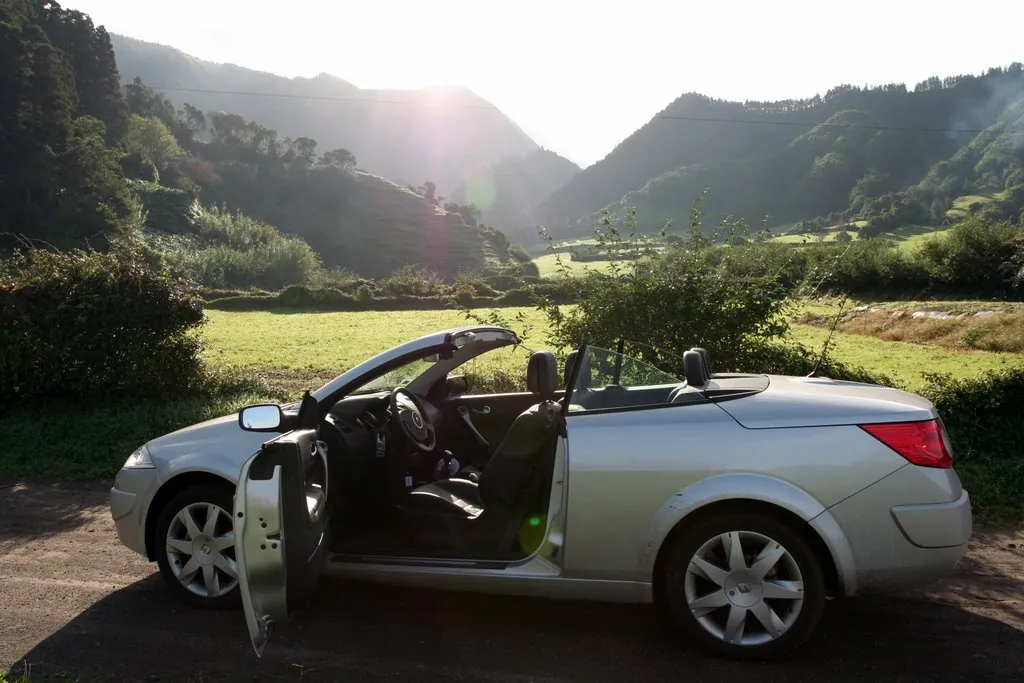
Car rental in the Azores: complete guide
Car rental in the Azores: compare islands, insurance, deposits and practical advice for booking and driving without surprises.
Plan your transport
Best Time to Visit the Azores: Month-by-Month Travel Guide
The best time to visit the Azores depends on what you want from the trip: stable weather, whale watching, flowers, hiking, lower prices or…
Choose when to visit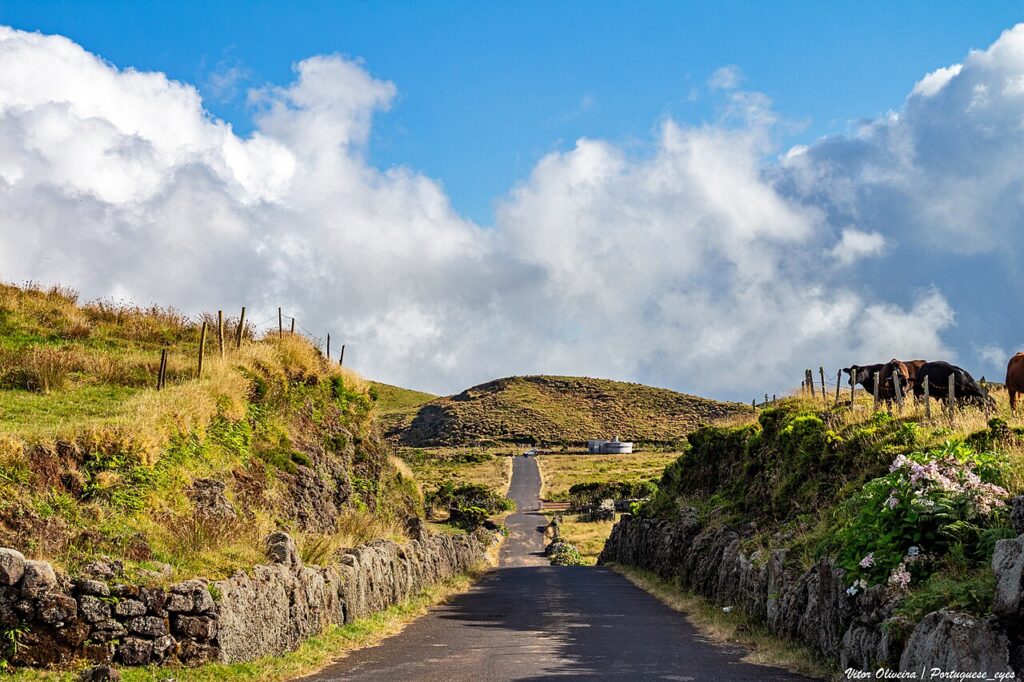
Azores in 7 Days: A Realistic Itinerary
Azores in 7 days can be an extraordinary trip, but only if the route respects distances, connections and the weather. This is not a…
Choose an itinerary