

Azores hot springs range from forest pools and iron-rich baths to a geothermal ocean cove. This guide compares six thermal experiences on Sao Miguel and Graciosa, explains which ones require tickets or the right tide, and helps you choose the pool that fits your route.
Opening hours, tickets and booking: quick comparison
Open the detailed guide before paying because every site operates differently.
Details checked on 14 August 2026. Opening hours, prices, capacity, closures and conditions can change at the venue or authorities’ discretion. Visitarazores does not operate these facilities or sell their tickets: check the official information and live availability before travelling.
This Azores hot springs guide focuses on the decisions travellers need to make before booking or setting out.
Volcanic activity has shaped daily life in the archipelago for centuries. In Furnas, warm mineral water feeds bathing pools among gardens; near Ribeira Grande, steam rises through a humid forest; at Ponta da Ferraria, geothermal water mixes directly with the Atlantic. These places share a volcanic origin, but the experience, access and planning are completely different.
The practical question is not simply which pool looks best in photographs. Travellers need to know whether a reservation is required, how long the visit takes, whether iron-rich water can stain swimwear, and what to do when weather or sea conditions change. The comparison below answers those questions before you commit to a route.
Azores hot springs: quick answer
The best Azores hot spring for a first visit depends on your priorities: choose Poca da Dona Beija for an organised evening soak, Terra Nostra for a botanical garden and a large iron pool, Caldeira Velha for a forest setting, or Ponta da Ferraria for a free but tide-dependent ocean experience.
- Most convenient: Poca da Dona Beija in Furnas, provided you reserve a suitable time slot.
- Best combined attraction: Terra Nostra, because the ticket includes the botanical garden and thermal pool.
- Most unusual: Ponta da Ferraria, where the water temperature depends on the tide and ocean conditions.
Where are the hot springs in the Azores?
The greatest concentration is on Sao Miguel. Furnas contains Poca da Dona Beija, Terra Nostra Park and smaller geothermal features, while Caldeira Velha and the historic Caldeiras da Ribeira Grande lie farther north. Ponta da Ferraria is on the western coast, below a steep road through a dramatic lava landscape.
Graciosa offers the main thermal experience outside Sao Miguel: Termas do Carapacho, a small coastal spa linked to mineral water known locally since the eighteenth century. The distance between islands matters, so Carapacho belongs in a Graciosa itinerary rather than a day trip from Sao Miguel.
Poca da Dona Beija: the easiest first thermal visit
Poca da Dona Beija has several warm pools, changing facilities and a defined visit duration. It is especially appealing in the evening, when steam and vegetation create a calm atmosphere. Timed admission makes planning predictable, but popular slots can sell out.
Choose it when the priority is soaking rather than sightseeing. Reserve before building the rest of your Furnas day, use dark swimwear, and allow time to change and shower instead of treating the ticket time as the total duration of the stop.
Terra Nostra: a botanical garden with an iron pool
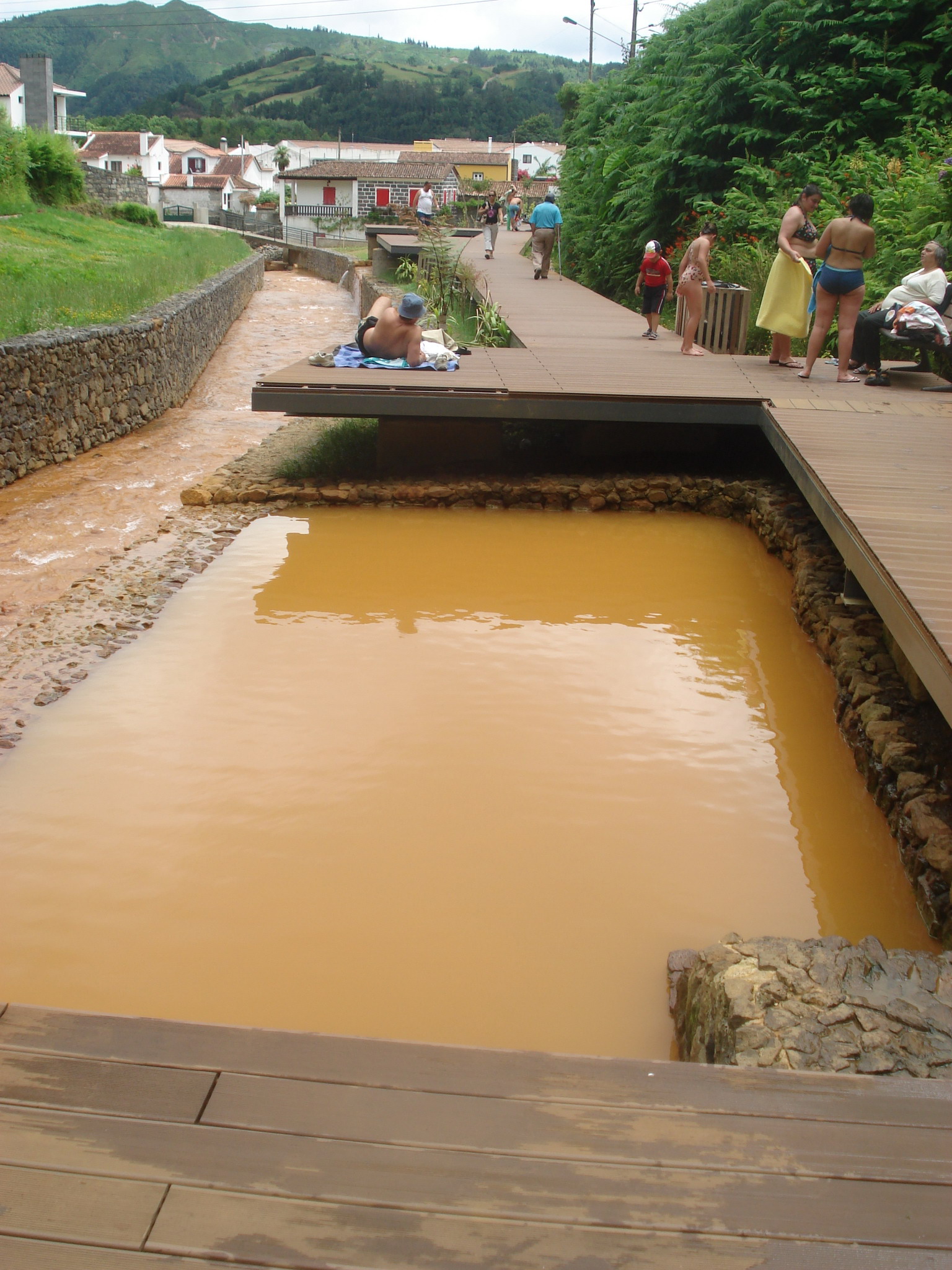
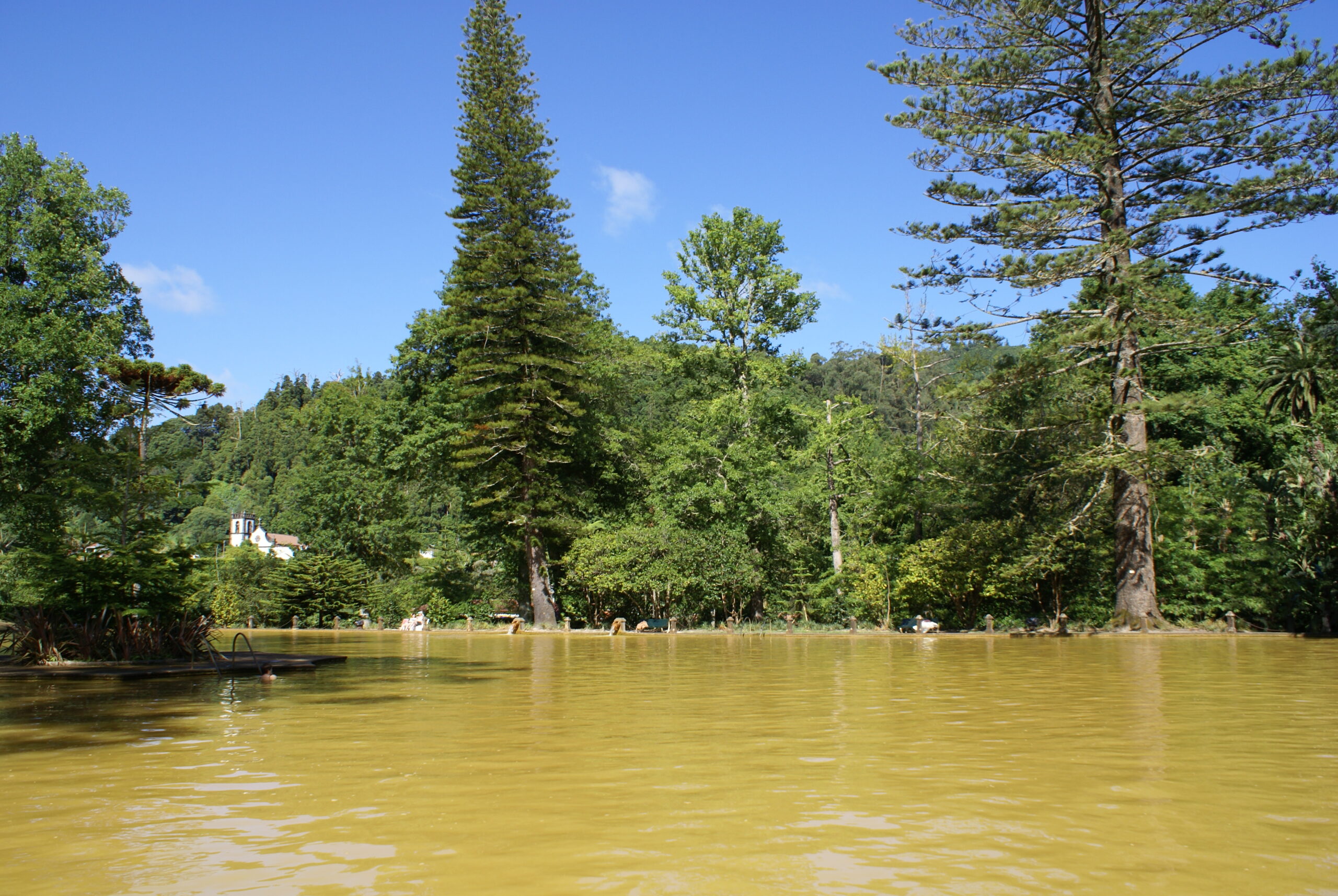
Terra Nostra Park is not only a bath. The large ochre-coloured pool sits inside a historic botanical garden, so the visit works best when you give both elements enough time. The water is warm and rich in iron, which is why pale swimwear can be permanently stained.
This is the strongest choice for travellers who want a half-day attraction rather than a quick soak. Walk through the garden before or after bathing, keep clean clothes separate, and avoid squeezing the park between several distant viewpoints.
Caldeira Velha: forest pools near Lagoa do Fogo
Caldeira Velha combines warm pools, a mineral waterfall and a humid forest setting. Admission is controlled to protect the site, and the bathing option is different from a simple environmental visit. Check the ticket type before paying.
Its location makes it a natural partner for Lagoa do Fogo and Ribeira Grande. Fog may hide the crater viewpoint while the forest pools remain enjoyable, so the route benefits from flexible ordering rather than a rigid minute-by-minute schedule.
Ponta da Ferraria: an ocean hot spring ruled by the tide
Ponta da Ferraria is the most variable option. Geothermal water enters a natural volcanic cove and mixes with the Atlantic. At the wrong tide, the sea may feel cold; in rough conditions, entering the pool can be unsafe regardless of temperature.
Treat the tide table as a planning filter, not a guarantee. Check swell, wind and local warnings, wear footwear with grip, and keep a land-based alternative for the west of Sao Miguel if the ocean is not suitable.
Ribeira Grande and smaller geothermal stops
Caldeiras da Ribeira Grande and Poca da Tia Silvina reveal a quieter side of thermal Sao Miguel. Some places are heritage or geothermal observation sites rather than unrestricted swimming pools, and access or bathing services can change.
They suit travellers interested in landscape, history and short local stops. Confirm what is open before driving and never assume that steaming water is safe to touch. A marked bathing facility and a fumarole are not interchangeable.
Termas do Carapacho on Graciosa
Termas do Carapacho is a formal thermal spa by the sea. Its character is closer to a wellness appointment than to an open natural pool, with services that may require advance booking and operating schedules that should be checked directly.
The spa makes sense as part of a Graciosa route including Furna do Enxofre and the Carapacho coast. It is not a substitute for the wild scenery of Sao Miguel, but it provides a distinctive reason to slow down on the smaller island.
Thermal pool, spa or natural cove?
Choose an organised thermal pool when you value changing facilities, predictable access and a known visit window. Choose a spa when treatment, quiet and professional services matter more than photography. Choose Ferraria only when you are comfortable evaluating the sea and accepting that bathing may not be possible.
This distinction prevents the most common disappointment: arriving with the wrong expectation. A botanical garden ticket, a treatment reservation and a free ocean cove solve different travel needs even though all three involve geothermal water.
How to plan an Azores hot spring route
- Choose the right island base. Sao Miguel is the easiest first choice when you want several different thermal experiences.
- Stay near the visits you have booked. Furnas shortens thermal-pool days, while Ponta Delgada offers more restaurants and services.
- Do not chain too many pools together. A good thermal visit takes time, and repeated heat exposure is tiring.
- Check weather and sea conditions. This is essential for Ferraria and useful for every thermal route.
- Pack two dark swimsuits. Iron-rich and mineral water can permanently alter pale fabrics.
- Leave room for changes. Access, tickets, tides and local operating conditions can change.
What to book and what can stay flexible
Reserve timed-entry pools and spa treatments first, especially in summer, at weekends and around sunset. Save confirmations offline and read cancellation conditions. Opening hours and operational rules can change faster than an evergreen travel article can be updated.
Leave viewpoints, short geothermal stops and Ferraria flexible. Weather and sea conditions should decide their order. That balance protects the important bookings without forcing you to stand at a clouded viewpoint or enter rough water simply because it appeared on a timetable.
Safety, swimwear and respectful bathing
Wear dark, inexpensive swimwear in iron-rich pools, bring a separate bag for wet items and use water shoes where the ground is slippery or rocky. Hydrate, take breaks from hot water and follow medical advice if heat exposure is a concern.
Stay on marked paths, respect capacity limits and never enter unapproved geothermal water. Fumaroles and springs can be much hotter than they look. At Ferraria, ocean safety takes priority over the desire to experience warm water.
Frequently asked questions
What is the best hot spring in the Azores?
For a first organised soak, Poca da Dona Beija is usually the simplest choice. Terra Nostra is better for a garden visit, Caldeira Velha for forest scenery, and Ferraria for a tide-dependent ocean experience.
Where are most Azores hot springs located?
Most visitor-ready thermal pools are on Sao Miguel, particularly around Furnas and Ribeira Grande. Graciosa has the important Termas do Carapacho spa.
Can you visit the thermal pools all year?
Many operate year-round, but hours, maintenance closures and access rules vary. Check each official website shortly before travelling.
Do Azores hot springs stain swimwear?
Iron-rich water at places such as Terra Nostra can stain light fabrics. Wear a dark, older swimsuit and keep clean clothing separate.
How much do Azores thermal pools cost?
Prices differ by attraction and ticket type. Ferraria natural pool can be free, while managed pools and spa treatments charge admission. Confirm current prices officially.
Does Ponta da Ferraria depend on the tide?
Yes. The thermal sensation and safety depend on tide, swell and wind. A favourable tide does not override rough-sea warnings.
What should I take to the hot springs?
Take dark swimwear, a towel, water, sandals or water shoes, a bag for wet clothes and the booking confirmation when required.
Are there hot springs outside Sao Miguel?
Yes. Termas do Carapacho on Graciosa is the principal formal thermal spa outside Sao Miguel covered in this guide.
Can I visit several hot springs in one day?
You can, but one major pool plus a contrasting route usually feels better. Multiple long hot-water sessions can be tiring and leave little time for the island itself.
Six detailed hot spring guides
Image credits and sources
Photographs from Wikimedia Commons and the Visitarazores media library. Visitor information checked against Visit Azores, the official attraction websites and local tourism authorities.
Editorial information reviewed in August 2026. Opening hours, prices, capacity, reservations, closures and sea conditions may change. Always confirm the official information before travelling.