
TransportAzores islands
9 min read · Practical guide in English
Contents: find what you needOpen guide
Ferries between the Azores islands can be a beautiful way to travel, but a risky basis for your itinerary if you do not understand the network. Not every island has a sea connection, routes change with the season, and the Atlantic has the final say on whether a sailing goes ahead. This guide explains which connections to check, where ferries fit into a trip and where you need a backup plan.
Quick answer: will ferries work for my trip?
If your itinerary stays within the central triangle of Faial, Pico and São Jorge, ferries are worth considering for your inter-island journeys. To reach São Miguel or Santa Maria from another island group, plan on flying: do not assume that a regular passenger ferry serves the eastern group. Boats also connect Flores and Corvo, but conditions at sea matter. Confirm the operating routes and dates with Atlânticoline before booking.
Who operates ferries in the Azores?
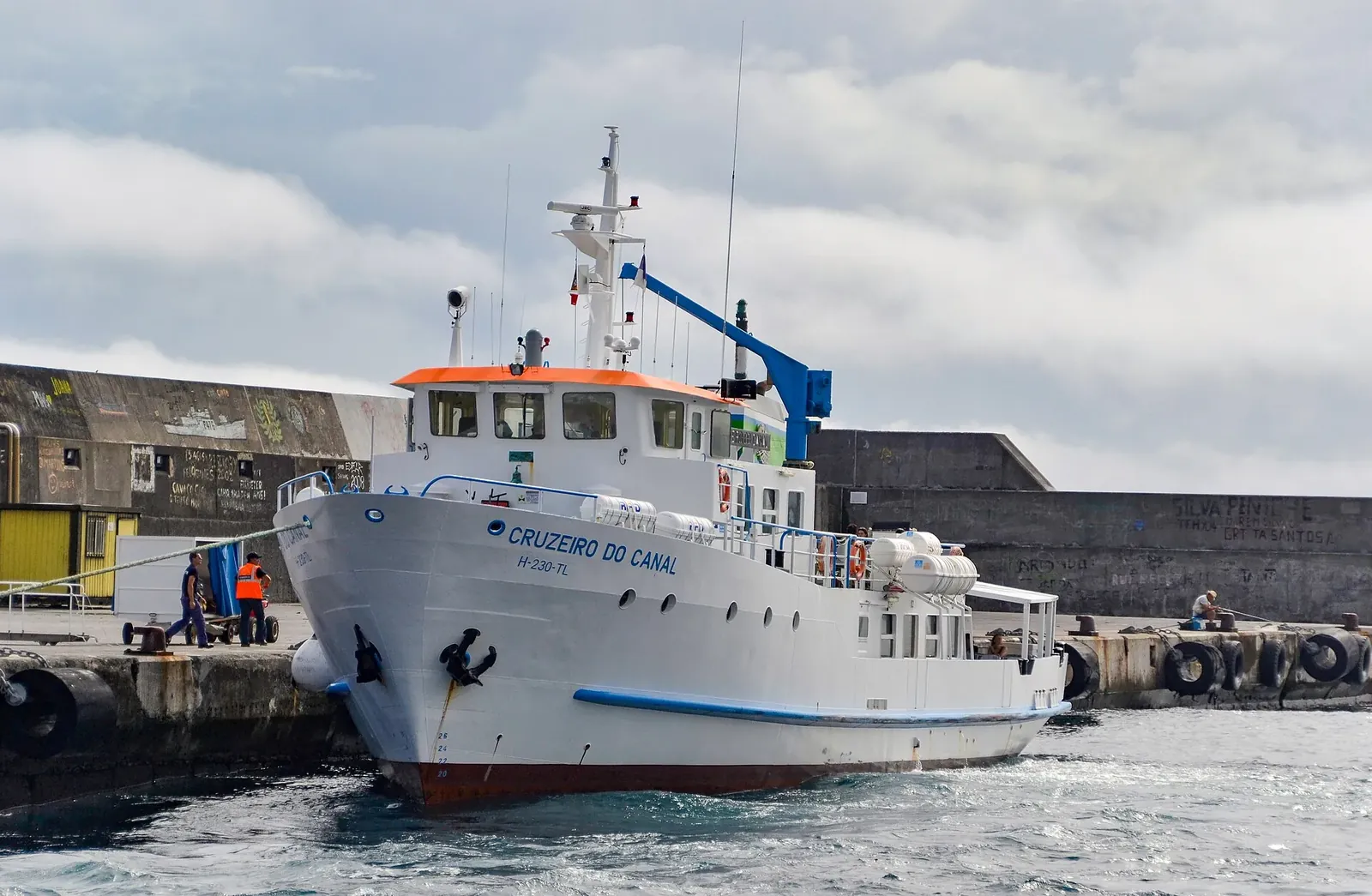
Atlânticoline is the regional public ferry operator, based in Horta. Having one main operator makes checking routes simpler: start with its current timetable rather than piecing together old schedules from different travel guides.
Lines are identified by colours. The operator’s official information lists the Blue line (Horta–Madalena), Green line (Faial, Pico and São Jorge) and Pink line (Flores–Corvo) as year-round operations. This does not mean daily departures or guaranteed sailings in poor conditions.
Fares depend on the crossing, passenger category and any vehicle. Check Atlânticoline’s official fares and discount conditions before paying. We do not quote a fixed amount that may become outdated.
The central triangle: where ferries fit best
If you remember one thing from this guide, make it this: Faial, Pico and São Jorge form the central triangle, with comparatively short distances between the islands. The crossing between Faial and Pico is especially useful for combining two islands without another flight.
Horta–Madalena: the classic crossing
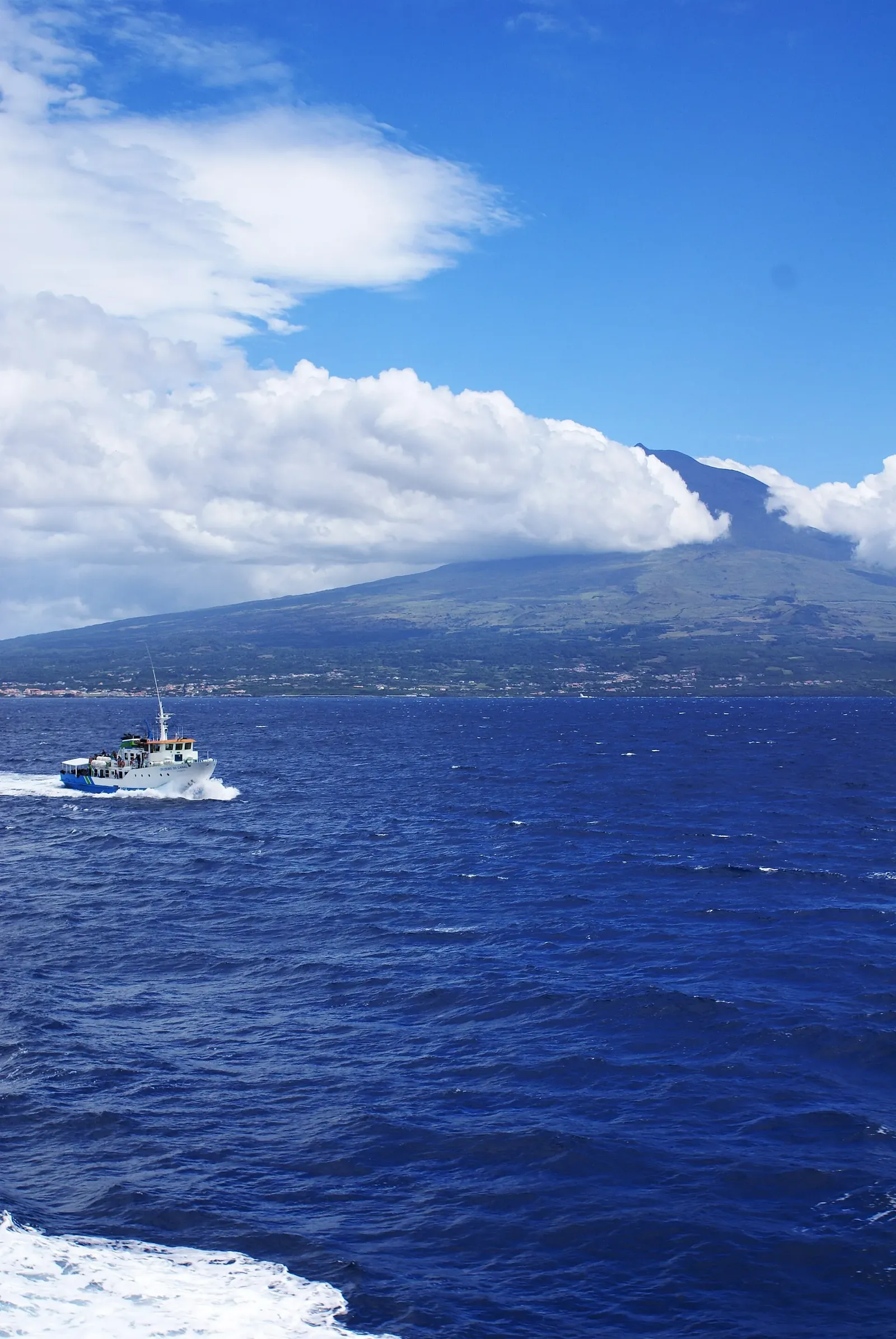
The route links Horta on Faial with Madalena on Pico. On a clear day, Pico’s mountain is a highlight of the journey. Check the timetable for your date and the crossing time shown for the particular sailing, rather than assuming every boat has the same schedule.
Many visitors stay on one island and visit the other for the day. This can work well, but allow some flexibility: if sea conditions deteriorate in the afternoon, a return sailing can be cancelled.
Both ports are in their respective towns. Check the actual walk from your accommodation, especially if you have luggage. Before you arrive, consult the Faial GPS map and the Pico GPS map to locate the ports and nearby points of interest.
São Jorge: the third corner
Journeys to São Jorge cover a wider, more exposed channel. Take sea conditions seriously and check which ports and connections operate on the dates of your trip.
If you want to explore the fajãs of São Jorge and arrive by boat, consider at least two nights on the island. A single day leaves little room to recover from a cancelled crossing.
For activities at your destination, compare options on Faial, Pico, São Jorge.
Longer routes: Graciosa and Terceira
For Graciosa and Terceira, check the routes and operating dates in the current timetable. Do not assume a connection shown in a summer itinerary runs throughout the year. These longer crossings require more time and flexibility.
They can be an enjoyable part of a relaxed trip, but are not a good basis for a tight connection. If you must reach Terceira on a particular day, compare flight options as well. The guide to travelling between the Azores islands explains how the transport options fit together.
Flores and Corvo: the western group
The sea connection between Santa Cruz das Flores and Vila do Corvo is an option for visiting Corvo from Flores. The channel is exposed, so check sailing status and the type of service you are booking: a public ferry and a sightseeing boat excursion are not the same product.
The practical rule is simple: do not leave Corvo until your last day on Flores. Allow another opportunity if the sea prevents your first attempt. Read the guide to visiting Corvo island before planning the day.
What ferries cannot do for your trip
A common planning mistake is assuming there is a regular passenger ferry between the central and eastern groups. Do not build an itinerary around a sea crossing to São Miguel or Santa Maria without an operating service confirmed by the operator.
If you combine São Miguel with an island in the central group, plan the inter-group journey by air before booking accommodation. A line drawn between islands on a map is not a transport connection.
Compare the vehicle crossing cost with returning the car and renting again on arrival.
High and low season: check the right timetable
This is where planning from abroad becomes confusing. The routes available on your dates matter more than the network described in a general travel article. A connection offered in one period may not operate in another.
A guide can describe a real route and still be unsuitable for your trip if it uses a timetable for a different season or year. Do not infer year-round operation from a photograph or a previous summer’s sailing.
Check the official timetable for your travel dates before booking non-refundable accommodation. Year-round operation does not imply daily departures; seasonal connections need to be checked separately.
The sea decides: planning for cancellations
A ferry in the Azores is not a train. Sea conditions can interrupt crossings in any season, so build some room for changes into an itinerary that depends on a boat.
Three useful rules:
- Avoid connecting a ferry with a flight on the same day. A cancelled boat can leave you unable to reach the airport.
- Do not leave a critical crossing until the final day. If you need to be on a particular island for a flight, allow at least an overnight buffer.
- Check directly with the operator before heading to the port. Use its service updates and ticket-office information, not just the weather forecast.
For a first impression, SpotAzores has live webcams around the islands. A view of the channel can help you understand conditions, but it is not a sailing confirmation: only the operator can confirm whether your service is running.
Seasickness
Longer, exposed crossings can feel very different from a short trip across the Faial–Pico channel. If you are prone to seasickness, ask a pharmacist or healthcare professional about suitable precautions before travelling, and follow the crew’s guidance on board.
Combining ferries and flights
For a one- or two-week trip, a useful starting point is flights for longer jumps and ferries for connections within an island group, where an operating route fits your dates.
For example, you might fly to Horta, spend several days travelling within the central triangle and depart from Pico or Faial. Confirm each leg before booking: the example is a planning approach, not a promise of a particular sailing or flight.
If you are starting from scratch, look at flights to the Azores first, then fit the ferries around the confirmed travel days.
Booking a ticket
Use the operator’s website or port ticket offices to check booking options. In busy periods, book ahead when possible, particularly for a vehicle: first confirm that the sailing carries cars and that your rental company permits the crossing.
Download the ticket to your phone and keep an offline copy or screenshot. Also check the correct departure terminal and the operator’s check-in instructions.
Boat excursions between islands
If you prefer not to arrange everything separately, compare organised trips that combine a boat journey with a visit on the destination island. Read the inclusions carefully: a ferry ticket, a boat tour and an island excursion can involve different services.
These are excursion searches, not public ferry tickets. Check departure ports, transfers and inclusions before booking.
Compare island-hopping excursions.
Frequently asked questions about inter-island ferries
Is there a ferry from São Miguel to the other islands?
Do not plan on a regular passenger ferry from São Miguel or Santa Maria to the other island groups. For an itinerary linking the eastern group with the central or western islands, check flights. Reconfirm the current route network with Atlânticoline before booking.
How long is the ferry from Faial to Pico?
Horta–Madalena is a short crossing, but check the scheduled duration of the departure you intend to book. The vessel and conditions can affect the journey, so allow a buffer before an important connection.
Do ferries operate in winter?
Yes, there are year-round services. Check your route’s winter timetable: that does not guarantee daily departures or prevent disruption by sea conditions.
Can I take a rental car on the ferry?
Only if the sailing carries vehicles and your rental company permits it. Compare the vehicle ticket and conditions with returning the car and renting again at your destination. Vehicle capacity can be more limited than passenger capacity.
How do I know whether the crossing will go ahead?
Check directly with the operator and its service notices before travelling to the port. SpotAzores webcams can show local conditions, but a webcam or weather forecast cannot confirm that a particular sailing will operate.
What happens if my ferry is cancelled?
Contact the operator about the options available for your booking and check its current conditions. Do not assume that a separate hotel booking or flight is covered. Leaving an overnight buffer before an important connection reduces the risk of a disruption affecting the rest of your trip.
Is a ferry or a flight better between islands?
Within the Faial–Pico–São Jorge triangle, compare operating ferry services with your plans. For longer jumps, consider flights and the consequences of a delay. Combining the two can work well, but neither transport option should be treated as immune to weather disruption.
Do I need to book ahead?
Check availability and booking requirements with the operator. Booking ahead is especially sensible in busy periods and when travelling with a vehicle. Do not assume that arriving on the day guarantees a place on your preferred sailing.
Related guides for your next step

Azores eSIM: mobile internet, roaming and Holafly
PLAN YOUR TRIP · CONNECTIVITYPractical guide · Reviewed 22 October 2026Maps, bookings and directions: prepare your phone before you leave.An Azores eSIM can help…
Read this guide
How much does a trip to the Azores cost? A 7-day budget and low-season savings
How much does an Azores trip cost? Compare a 7-day high-season budget with low-season savings on cars, accommodation and flights.
Read this guide
What to do in the Azores when it rains or gets foggy: ideas by island
What to do in the Azores when it rains or gets foggy: museums, cultural visits and backup plans by island, with opening and safety…
Read this guide