
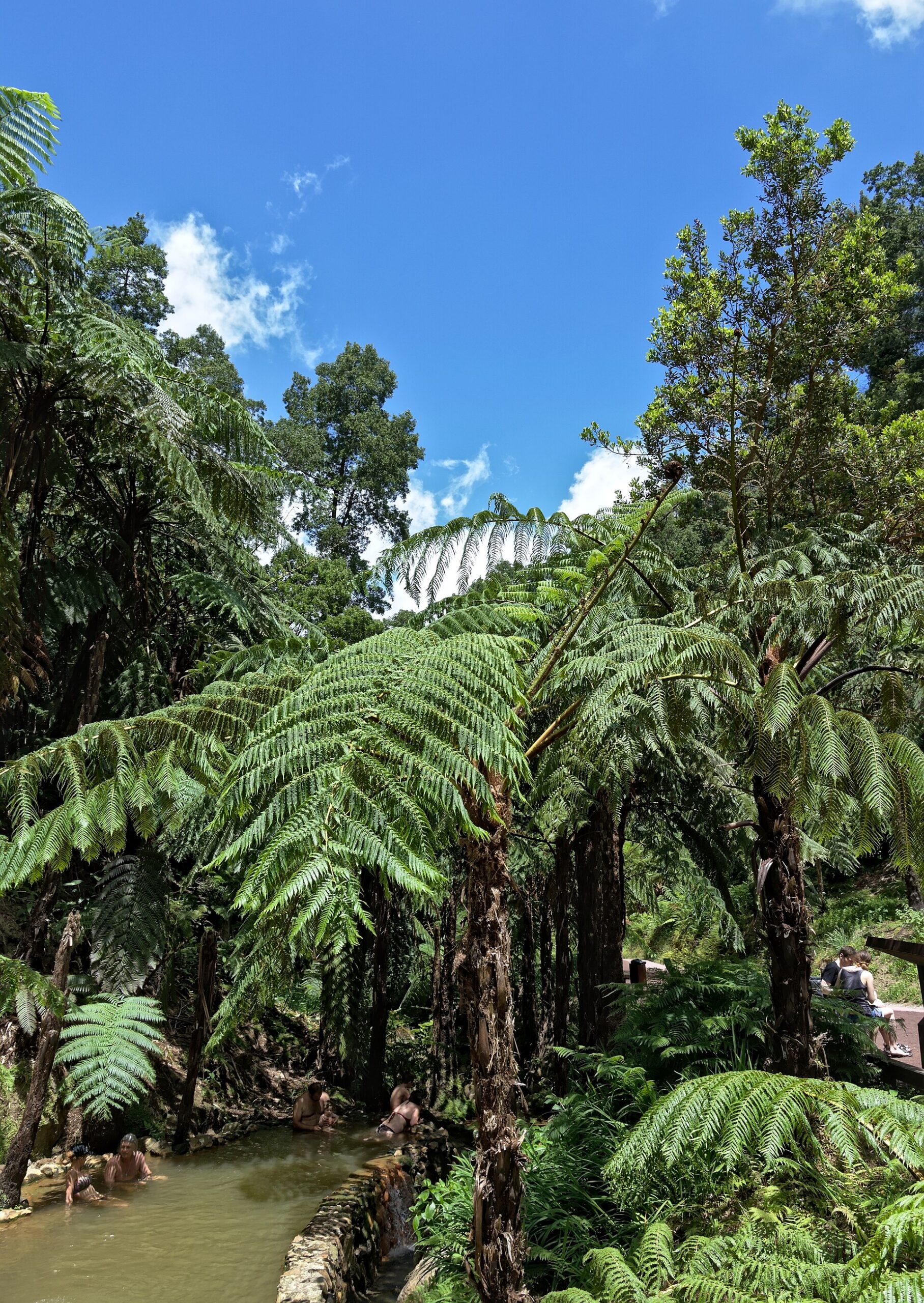
Ribeira Grande hot springs tell a quieter story than the famous pools of Furnas. Warm water appears among old bathhouses, springs and caldeiras that still belong to the everyday landscape. Do not come looking for a large tourist complex; come to understand how geothermal water has accompanied life on Sao Miguel for generations.
Opening hours, admission and contact
This guide covers two different experiences: the paid Termas das Caldeiras da Ribeira Grande baths and the free Poça da Tia Silvina foot-soak.
Details checked on 14 August 2026. Opening hours, prices, capacity, closures and conditions can change at the venue or authorities’ discretion. Visitarazores does not operate these facilities or sell their tickets: check the official information and live availability before travelling. Termas das Caldeiras does not publish a current official public price list; the hours and price shown are an operating reference and must be confirmed by phone.
This Ribeira Grande hot springs guide focuses on the decisions travellers need to make before booking or setting out.
“Lesser known” does not mean secret or automatically open for swimming. Some sites are landscapes of fumaroles and historic buildings; others offer small bathing facilities whose operation can change. Travellers must distinguish a geothermal attraction from an approved thermal bath.
These stops reward curiosity and a slower route through northern Sao Miguel. They are useful alternatives to the big pools, but only when expectations are realistic and current access has been checked before driving.
Ribeira Grande hot springs: quick answer
Visit Caldeiras da Ribeira Grande for geothermal landscape and thermal heritage, and treat Poca da Tia Silvina as a brief Furnas stop. Confirm whether any bathing service is operating; never enter steaming water unless the area is explicitly approved.
- Best for: repeat visitors, local history, geothermal landscapes and a north-island route.
- Do not assume: every hot spring or fumarole is a bathing place.
- Combine with: Ribeira Grande, Salto do Cabrito or Caldeira Velha.
What “lesser-known hot springs” really means
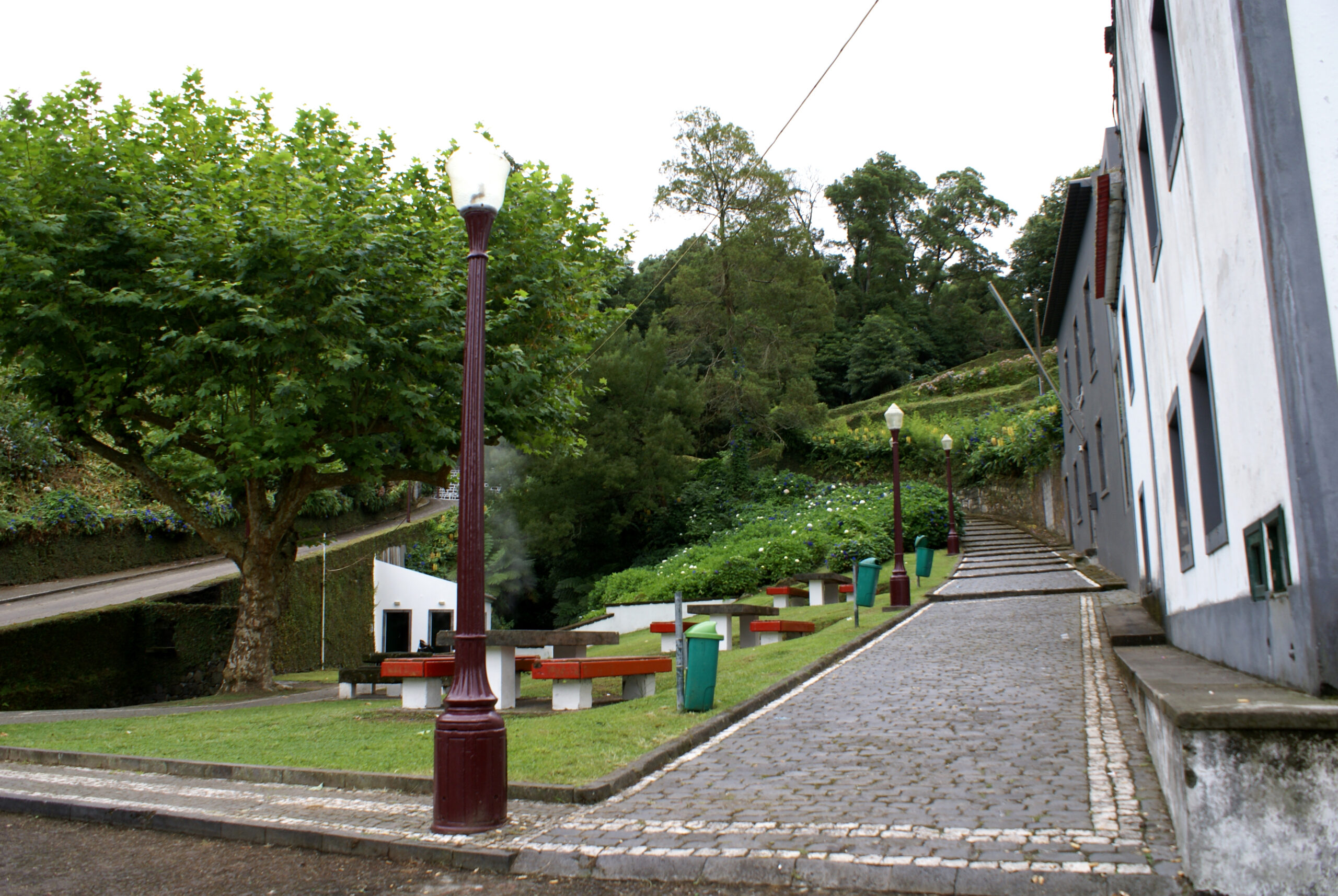
The phrase covers several different places: historic spa buildings, fumarole fields, mineral springs and small public bathing points. They do not all offer the same access or safety conditions. A search result that says “hot spring” is not permission to enter the water.
Approach these sites for context first. If an authorised bathing service is open, it becomes an additional experience rather than the only reason for the drive.
Caldeiras da Ribeira Grande
Caldeiras da Ribeira Grande is a fumarolic field associated with the Fogo volcanic complex. Steam, mud and mineral water shaped a small thermal settlement in a green valley inland from the city. Official tourism information highlights both the geothermal area and nearby bathing heritage.
Walk only on marked routes and keep away from boiling or unstable ground. The landscape is a place to observe volcanic activity, not a natural pool to test with a hand or foot.
The historic Ribeira Grande thermal baths
Thermal buildings in the valley date back to the nineteenth century, with earlier bathing structures forming part of local history. The architecture and setting explain how mineral water was used long before modern tourism reached Sao Miguel.
Operating arrangements can change with concessions, maintenance and service development. Verify whether treatments or bathing are currently available and whether an appointment is needed.
Poca da Tia Silvina in Furnas
Poca da Tia Silvina is a small thermal point in Furnas, not a substitute for the scale and facilities of Dona Beija or Terra Nostra. Treat it as a brief local stop and check current conditions before planning to use the water.
Its value lies in showing how geothermal water appears throughout village life. Keep the visit short, respect local use and never crowd the area for photographs.
How to confirm access and bathing
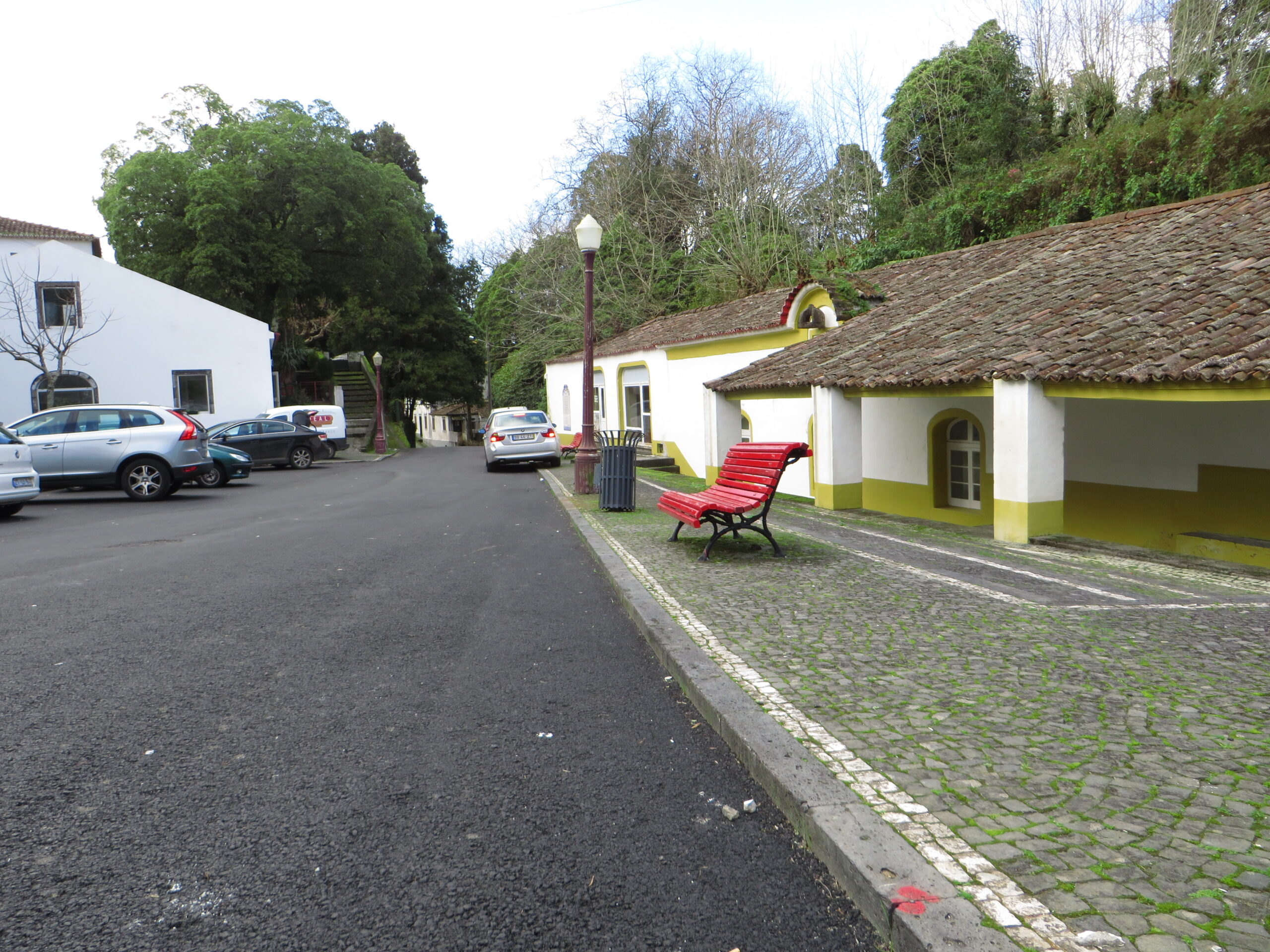
Check municipal or official tourism information, then contact the facility directly when a bathing service is important. Ask whether it is open, whether booking is required and what the session includes. Map listings and old reviews may describe a different operational period.
Save a second objective nearby. That way a closure becomes a change in emphasis rather than a failed day.
Temperature and geothermal risk
Water emerging from volcanic ground can be dangerously hot and may contain gases or unstable mineral deposits. Temperature cannot be judged safely by appearance. Approved bathing areas control risks that an informal spring does not.
Follow barriers and signs, keep children close and never step onto steaming soil. A site can be fascinating without being suitable for immersion.
A north Sao Miguel thermal route
Combine Caldeiras da Ribeira Grande with the city centre, north-coast viewpoints and Salto do Cabrito when conditions and trail access permit. Caldeira Velha can be added with a timed ticket, creating a day that mixes history, forest and geothermal bathing.
Avoid adding Furnas merely to collect Poca da Tia Silvina. Visit that small stop as part of a separate Furnas day, where it fits naturally beside the village and larger thermal attractions.
How this differs from an organised thermal pool
Managed pools provide defined admission, changing facilities, monitored water and clear operating rules. Historic or minor thermal sites may offer none of those. They demand more verification and a willingness to enjoy the place without bathing.
Choose organised pools for a guaranteed soaking session. Choose Ribeira Grande’s thermal heritage when learning about the island and avoiding the busiest attractions matters more.
What to bring
Bring walking shoes, a rain layer and water for the valley. Pack swimwear only after confirming an authorised bathing service. A small towel and waterproof bag are useful but should not create pressure to enter unsuitable water.
Mobile coverage may vary inland, so save directions and contact details. Respect residents, private property and any temporary closure.
Who will enjoy these thermal stops?
Repeat visitors, geology enthusiasts and travellers interested in local history will gain the most. First-time visitors seeking a classic warm pool may prefer Poca da Dona Beija, Terra Nostra or Caldeira Velha.
The quieter route works when uncertainty is accepted. Its value is not measured by the number of minutes spent underwater but by a fuller understanding of Sao Miguel’s volcanic landscape.
Before you leave: six quick checks
- Call on the day to confirm that paid bathing is operating.
- Ask for the current price and accepted payment methods at the venue.
- Do not confuse Termas das Caldeiras with Poca da Tia Silvina, which is a foot-soak.
- Never enter geothermal water unless bathing is explicitly permitted.
- Wear stable footwear because wet ground can be slippery.
- Keep a nearby alternative in case the facility is closed or unavailable.
Frequently asked questions
What are the lesser-known hot springs on Sao Miguel?
Caldeiras da Ribeira Grande, the historic thermal baths and Poca da Tia Silvina are quieter geothermal stops beyond the major ticketed pools.
Can you bathe at all of them?
No. Some are observation or heritage sites. Bathe only where access is explicitly authorised and currently operating.
Is Poca da Tia Silvina a large pool?
No. It is a small local thermal point in Furnas and should not be compared with the facilities of Dona Beija or Terra Nostra.
Are the sites free?
Outdoor geothermal areas may be free to observe, while organised bathing or treatments can charge. Check the current arrangement.
Are fumaroles dangerous?
Yes. Water, steam, gases and ground temperatures can be hazardous. Stay behind barriers and on marked paths.
Do you need a car?
A car is the most practical option for Caldeiras da Ribeira Grande and a wider north-island route, although local transport availability should be checked.
Are they better than Dona Beija?
They serve a different purpose. Choose them for heritage and quiet exploration; choose Dona Beija for a predictable thermal bathing session.
What should I bring?
Bring walking shoes, a rain layer, water, saved directions and swimwear only if an approved bathing service is confirmed.
What if the baths are closed?
Visit the geothermal valley and continue to Ribeira Grande, Salto do Cabrito or another confirmed attraction.
Explore the other six Azores hot spring guides
Image credits and sources
Photographs from Wikimedia Commons, uploaded to the Visitarazores media library. Visitor information checked against the Ribeira Grande municipality and Azores tourism authorities.
Editorial information reviewed in August 2026. Opening hours, prices, capacity, reservations, closures and sea conditions may change. Always confirm the official information before travelling.